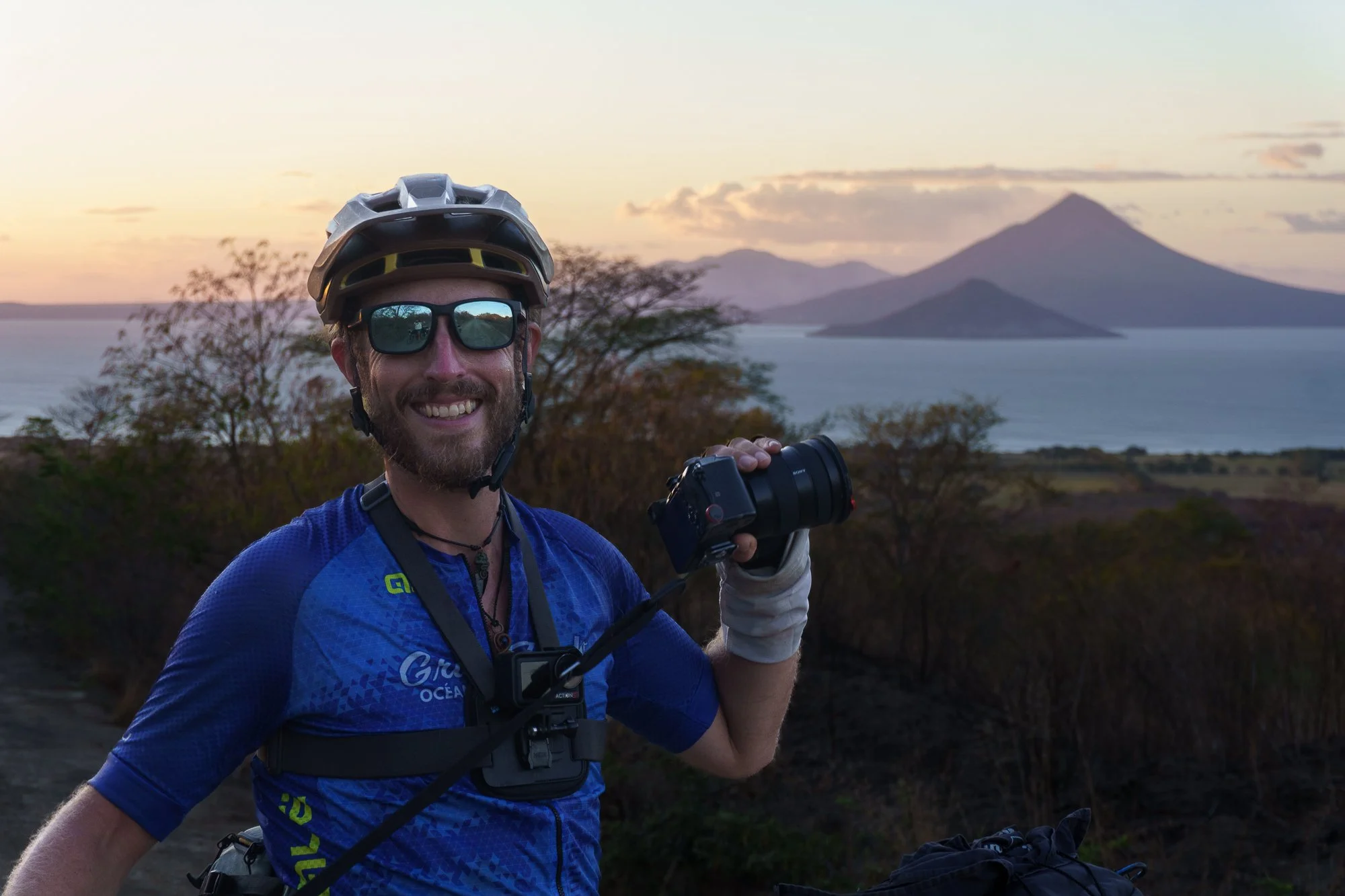
A Reflection from the Saddle in Nicaragua
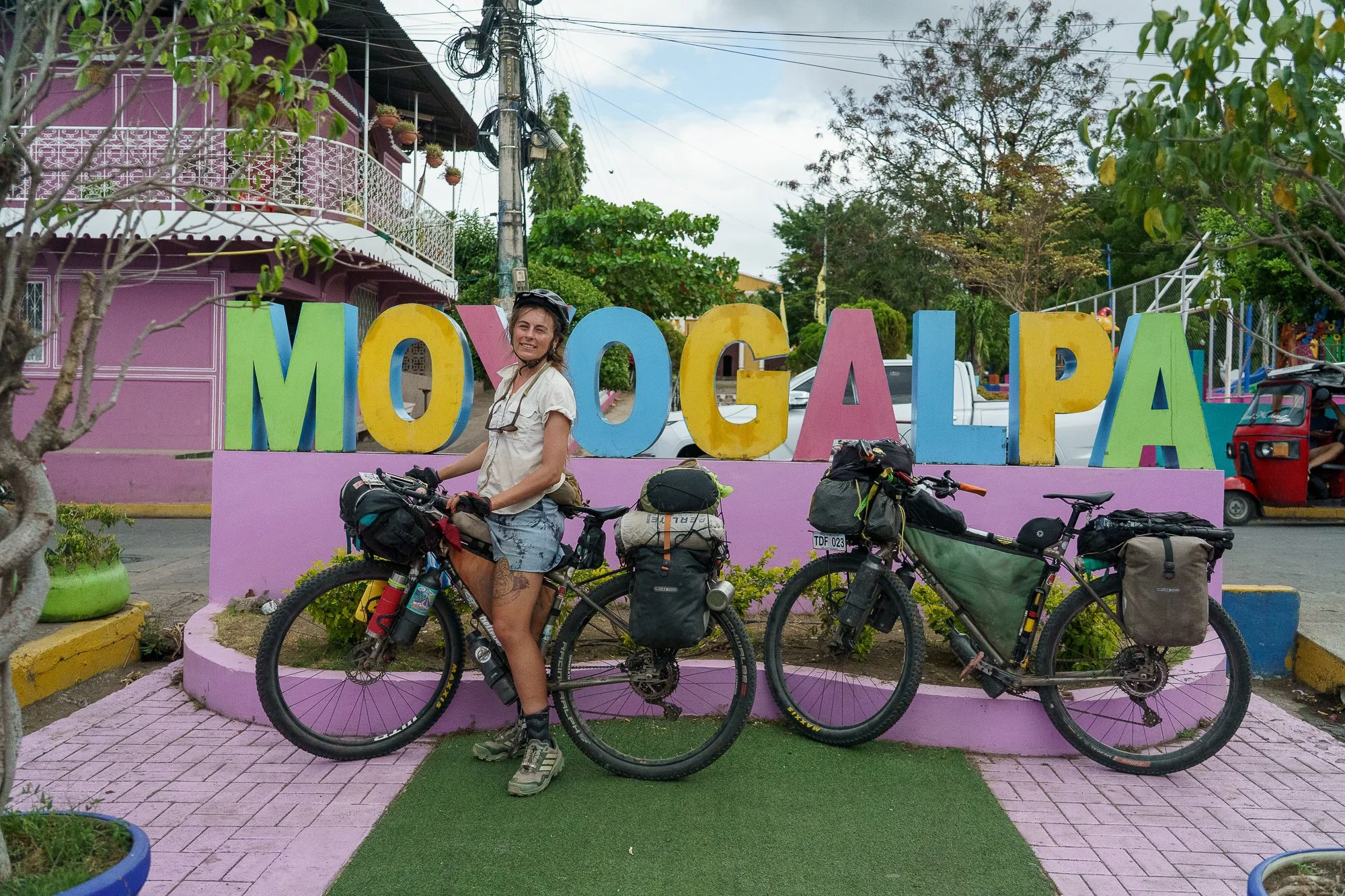
I love our journey across the Americas. I am grateful that we are able to do what we do. Every day again is a new adventure. I appreciate both the good and the bad, the ugly and the beauty. But every now and then, our travels rub me the wrong way.
Today is one of those days. Let me explain.
As I write this, I’m sitting in a tastefully decorated, colonial-style coffee house in Granada, Nicaragua. There’s air conditioning, a souvenir store, and fancy lattes on the menu. As we wait for our hostel room to be cleaned, Ryan and I gratefully sip on those same fancy coffees after three hours of riding. We’re surrounded by a dozen or so elegant wooden tables and chairs, all occupied by tourists. Apart from the waiters, everyone is a tourist or expat. And looking around, I’m just having a moment where I need to write down some of my feelings after more than a year on the road.
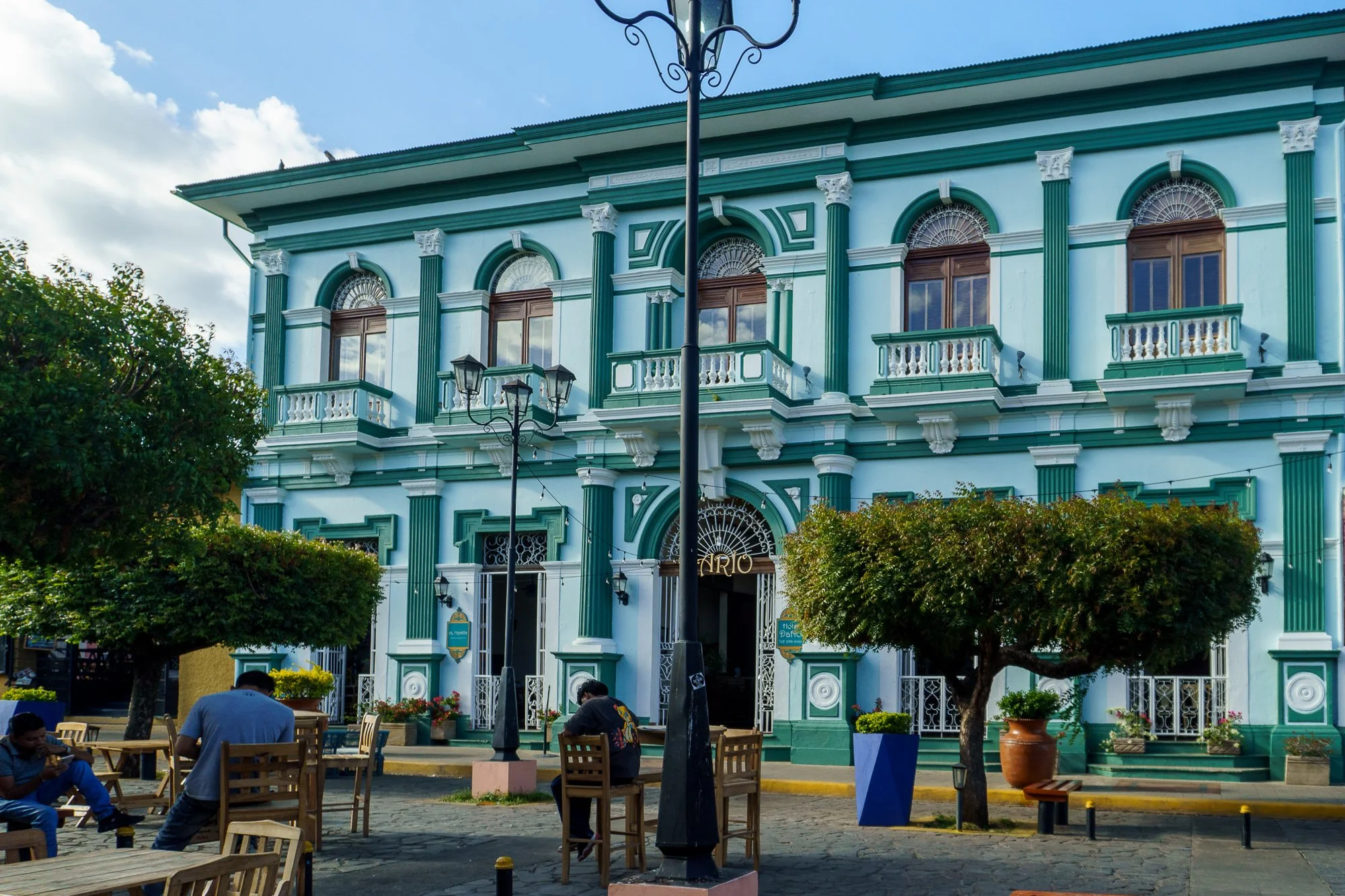
One of the many Spanish colonial buildings in Granada, Nicaragua.
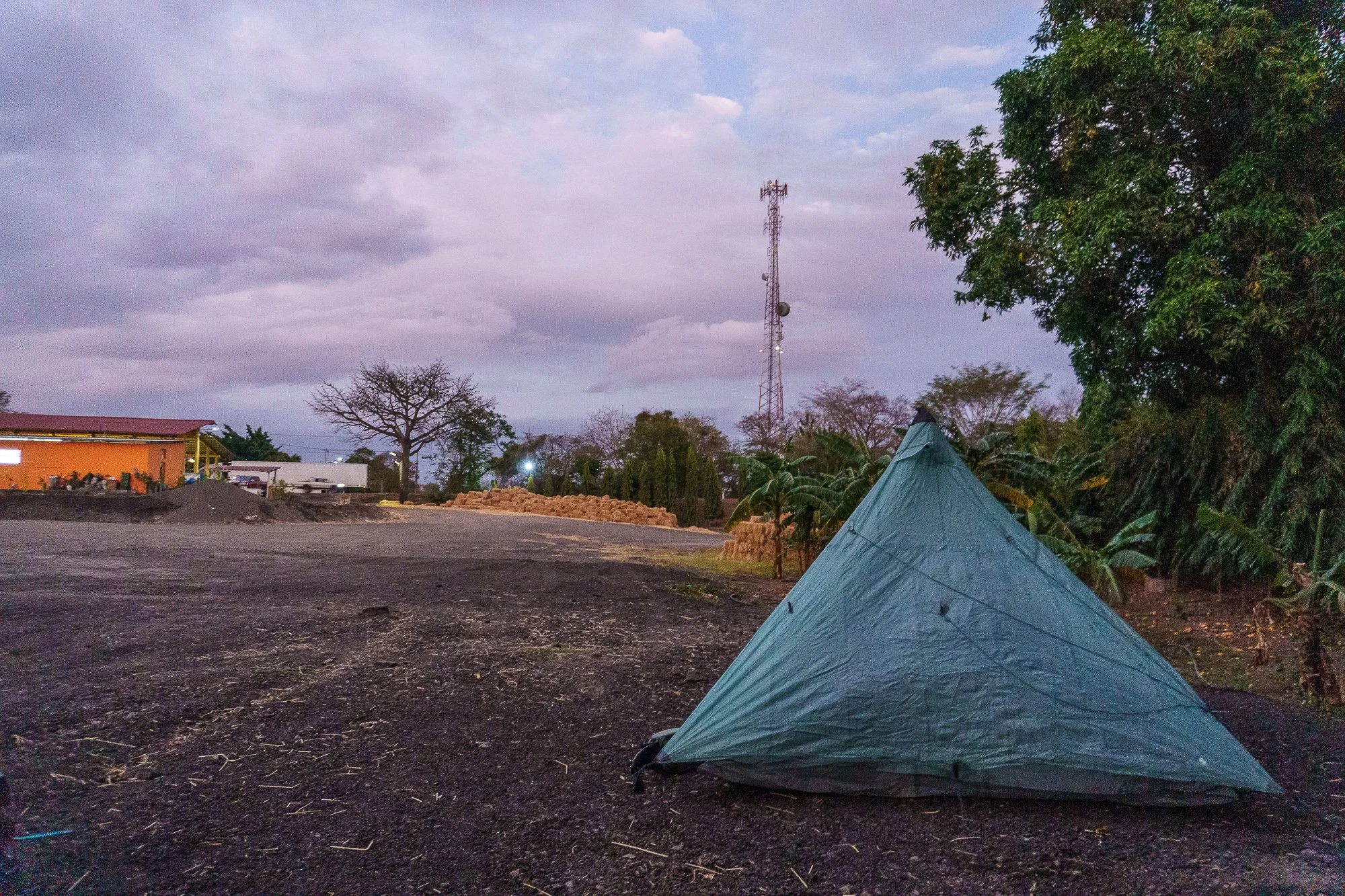
We’ve spent the night camped in a trucker’s parking lot, which does not sound like a great place to sleep, but hear me out: There’s showers, bathrooms, it is safe and free of cost! Outside of towns, lodging options and wildcamps in Nicaragua are scarce and that’s why we often end up at huge parking lots behind gas stations and restaurants, together with a dozen truckers.
When the trucks start riding early (and loudly), Ryan and I too are up and ready to go. Morning rides are usually quiet and introspective, a perfect time to turn inward and watch the world rise from its slumbers. Especially when you’re riding the road on a bicycle, you get a real glimpse into everyday life, and Nicaragua is no exception.
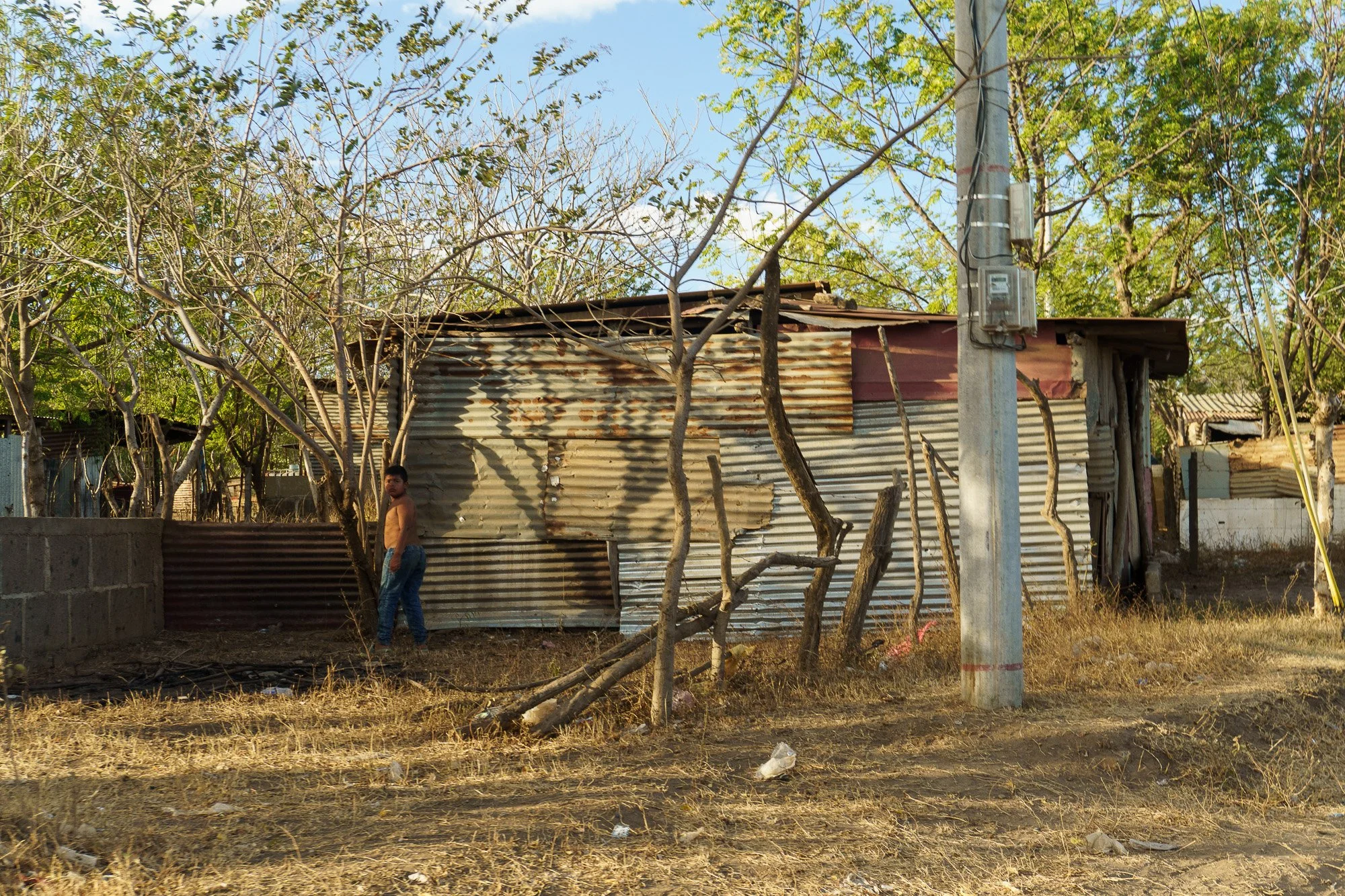
We passed this kid early in the morning, hacking down tree branches with his machete.
Today’s a normal Monday in March, but just like every other weekday, I see an awful lot of children working in the fields, construction, or helping their parents transporting hay and bananas on the family’s horse-cart. Of course, I am looking through the eyes of a teacher, and I can’t help but notice a stark absence of schools for children over the age of twelve. It leaves me feeling sad and frustrated, and on top of my “teacher glasses”, I’m also wearing my “born in Belgium glasses”, where (for the last couple of decades) most children go to school until they are 16 or 18 years old. I remind myself that these glasses I’m wearing color my vision and my ideas, but that doesn’t mean I can shake the feeling of unease.
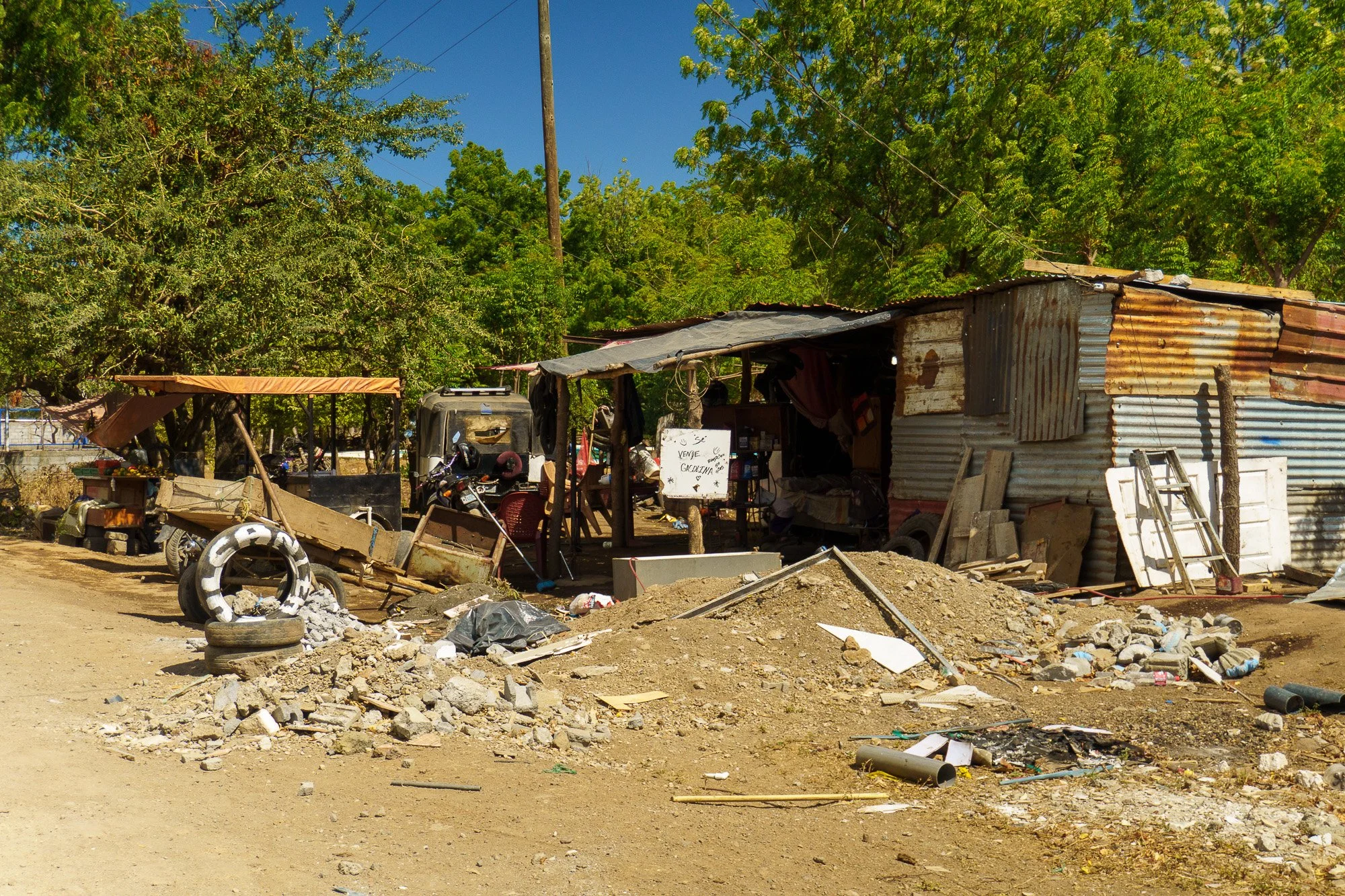
The miles go by fairly easily as we transition from farmland to tiny villages. These small pueblos announce themselves with increasing amounts of trash by the side of the road, rivers that no longer run because of the sheer volume of plastic, and cattle and horses tied to rocks, suffering the heat of the sun. The closer we get to Granada, the more we see workers collecting roadside litter. But beyond that, trash is a constant presence in the countryside; collection seems to be something reserved more for the cities.
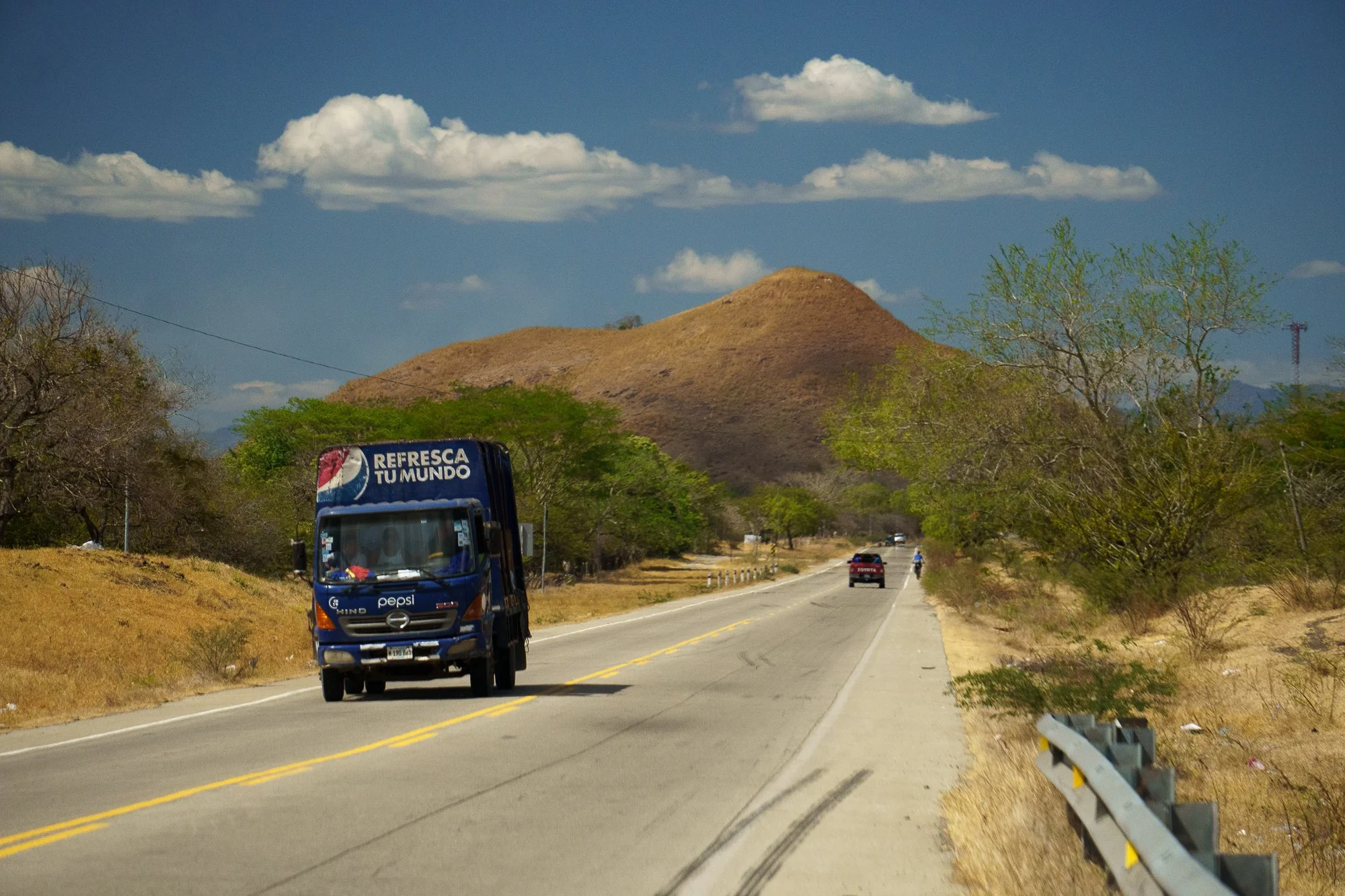
Cycling in +40 Celsius / +100F on the Panamerican Highway.
Ryan and I experienced it ourselves: packing up our trash after camping and simply not finding any trash bins or garbage bags to deposit it. “Leave No Trace” is all well and good if you have a government that supports a clean environment. If not, you’re stuck with piles of trash just outside your front door, which people try and burn in small heaps on their lawns—something we witness hourly.
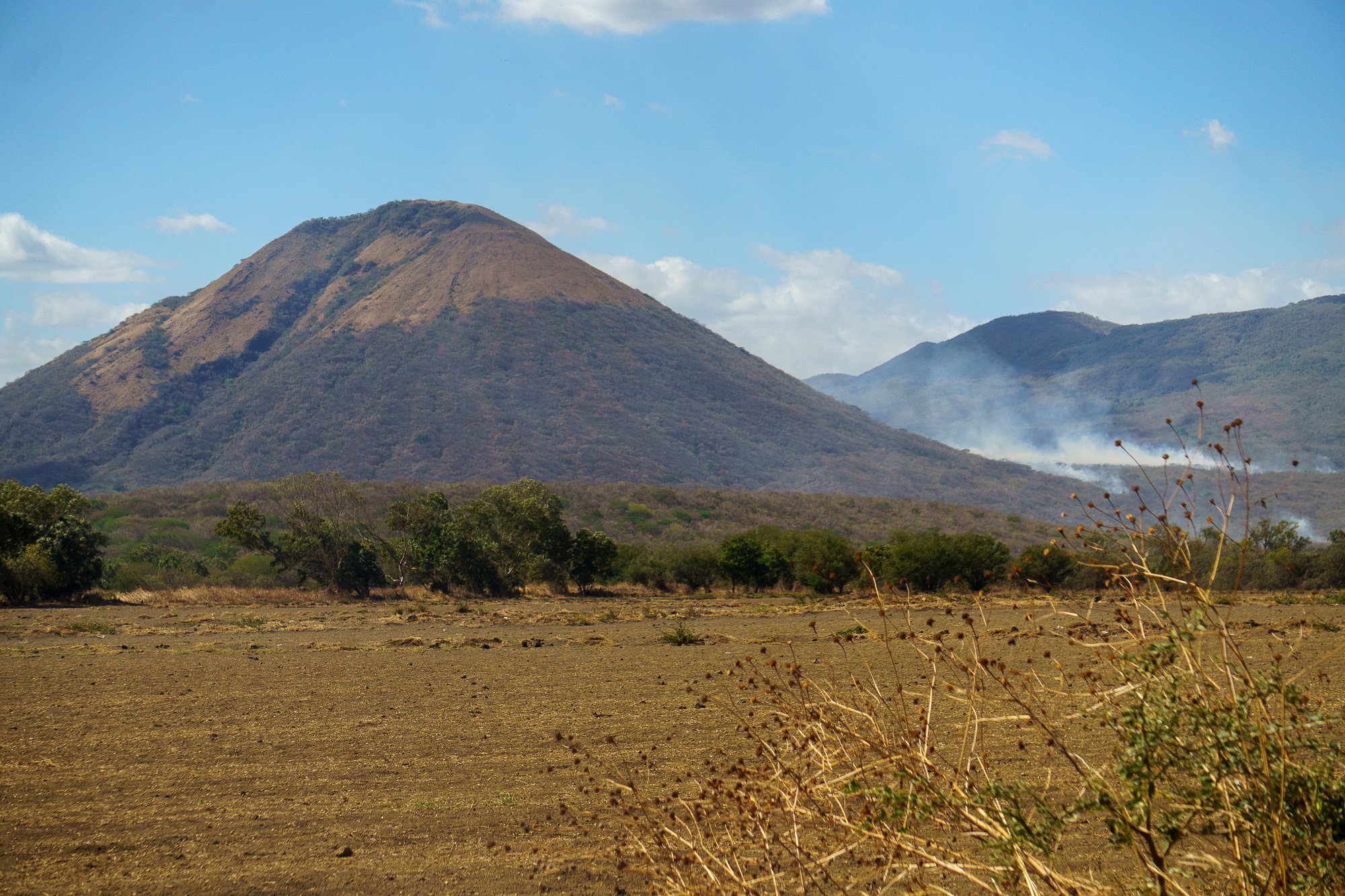
At times, we cover our faces from the smoke of these burning piles because the stench of burning plastic is hard to bear. And the saying still holds true: One man’s trash is another man's treasure. We see many folks picking through cans, boxes, and plastic bags alongside critters and vultures, trying to find something useful or edible.
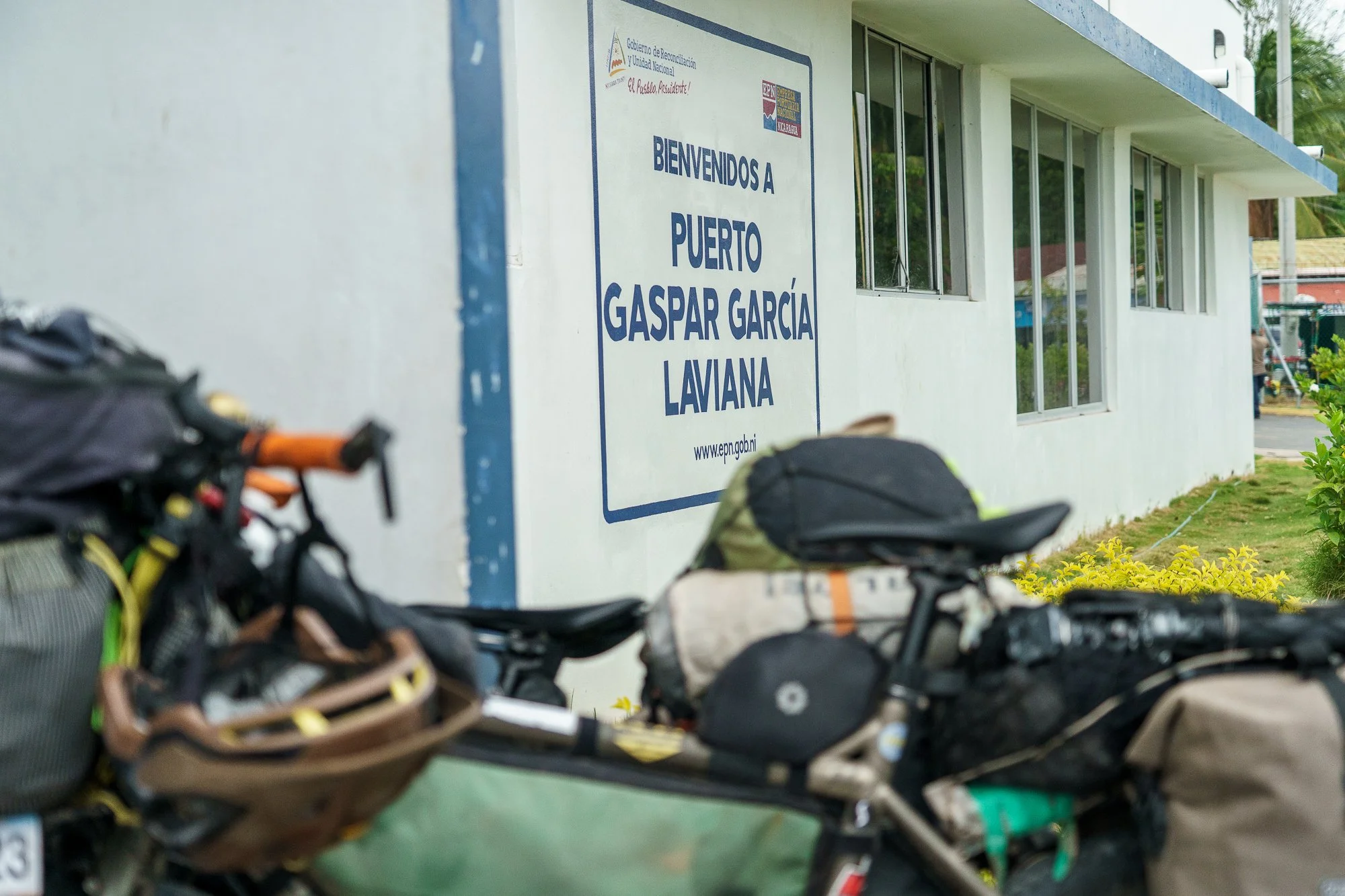
With this in mind, we can understand the many bribes and “gringo taxes” we endure here in Nicaragua. It started right away, at the border with Costa Rica, where a border official tried to charge us $28 instead of the mandatory entry fee of $26. Or the pedicab driver who suddenly charged us $5 per person after we had agreed on $5 for the entire ride. Or take yesterday’s breakfast, where 25 cordobas were mysteriously added to the bill.
We’ve been paying gringo taxes occasionally ever since we left Ushuaia, but encountering this on a daily basis in Nicaragua starts to wear us down. Yes, it’s only a few dollars, and initially, we never made a big deal out of it. But after a year on the road, it gets tiring of paying more just because we are foreigners - even if we realise why they do it.
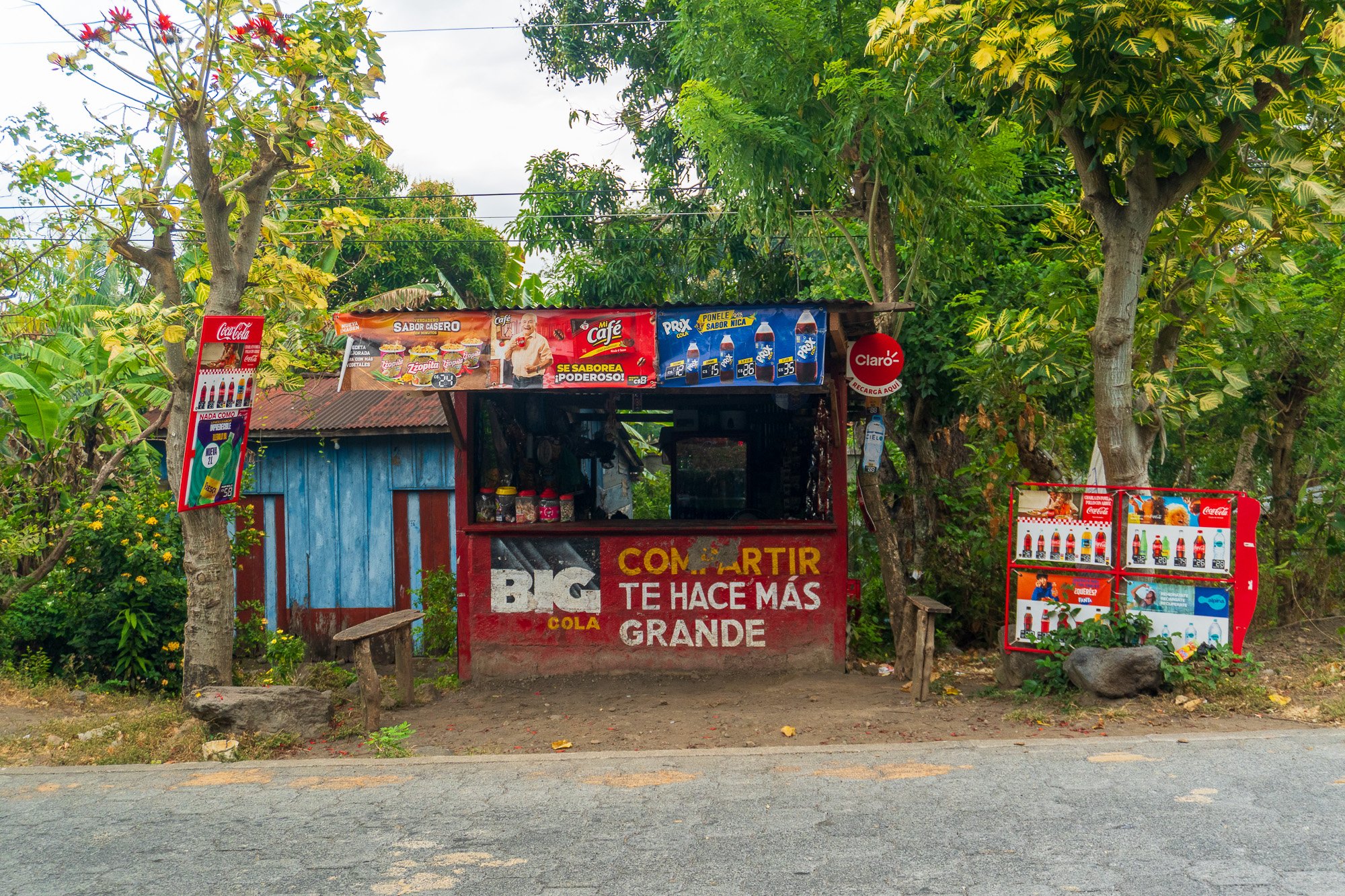
One of the many roadside stalls or tiendas that sell snacks and drinks.
Fast forward three hours and here we are, in a completely alien and sterile environment. Far away from the makeshift vendor stalls, street sellers, and horse-drawn carriages selling plátanos and cane sugar drinks. Suddenly, we find ourselves in tourist paradise with colourful colonial mansions and access to almost anything our heart desires.
Mind you, I didn’t write this to complain about tourism. Heck, Ryan and I are part of that same industry!
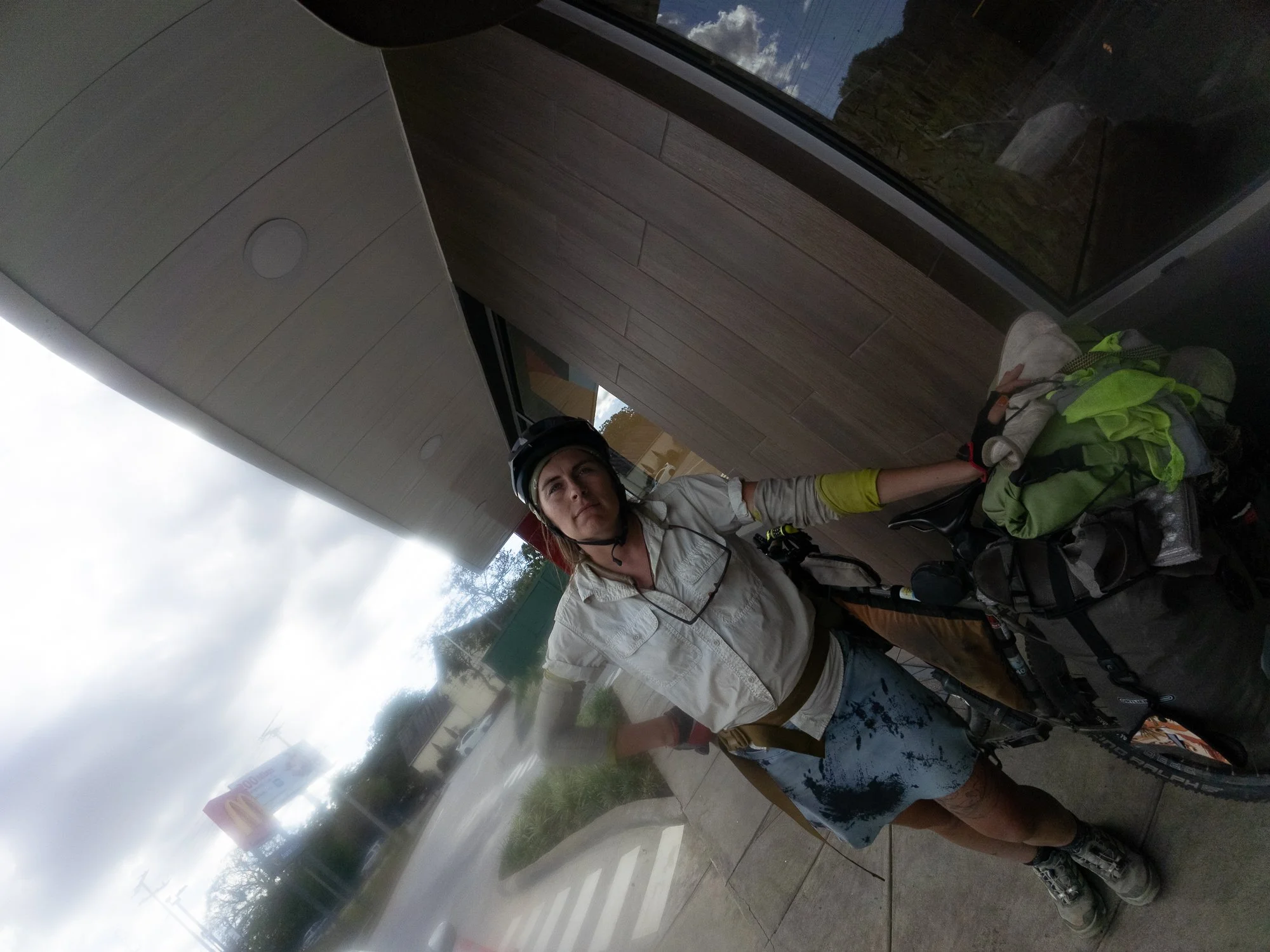
Thanks to our strong passports, we are able to enter most countries seamlessly and are greeted by most locals as old friends. Plus, as the daughter of a tourism manager in probably the most touristy town in Belgium, I recognise the many benefits of a sustainable tourism industry. And yet… sometimes, it just feels off.
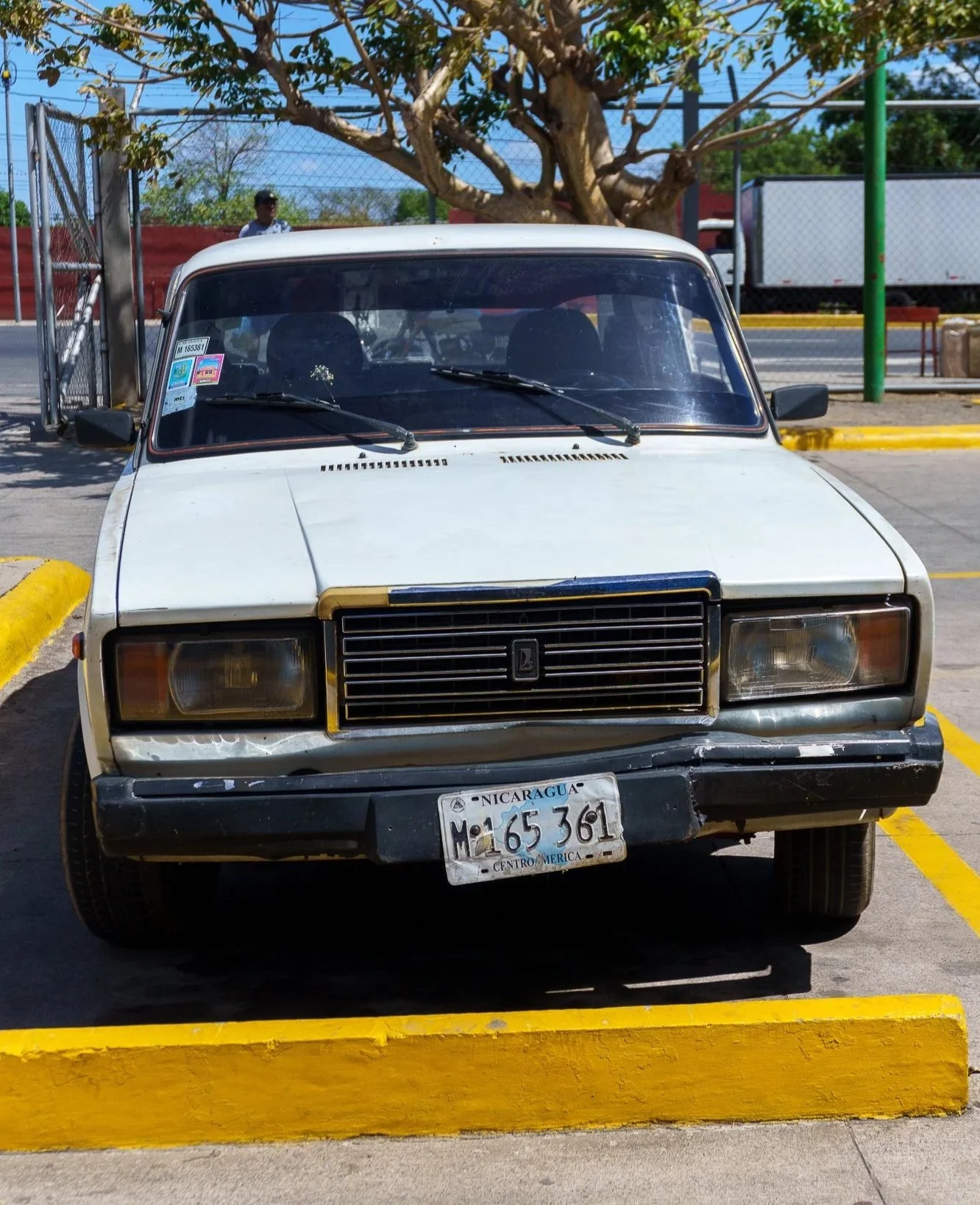
Sometimes I feel ashamed to be traveling through countries where many struggle to get by. Where drinking water is not always easily available. Where jobs seem scarce and food security an illusion. Where time seems to stand still and every penny matters.
It somehow helps, traveling on bicycles, as many Nicaraguans get around on bikes too. Cycling is universal and accessible. Locals truly seem to love cyclists—especially in South America. Cycling remains a humble way to travel, and yet, our way of cycling is still luxurious.
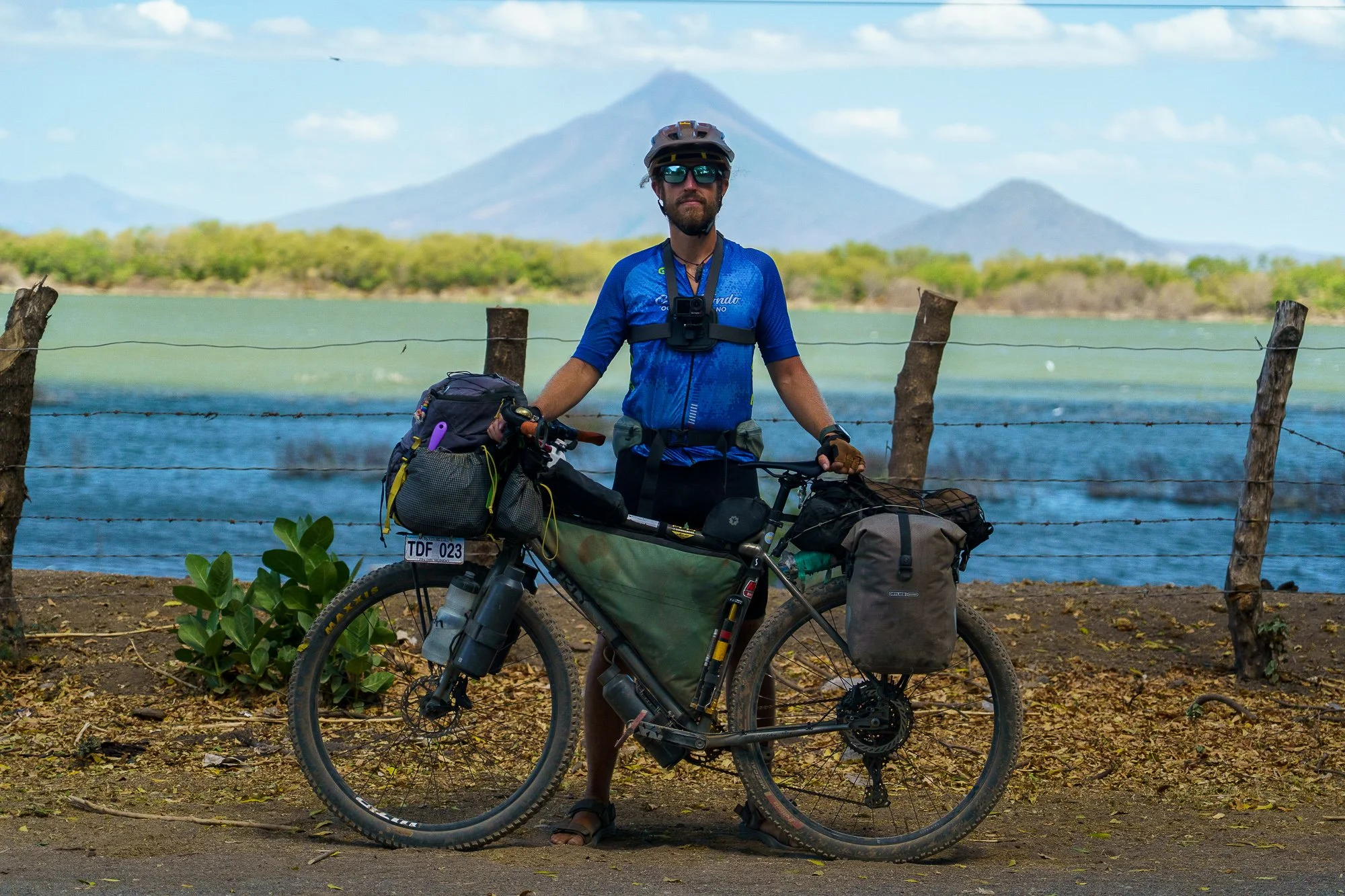
Ryan and I are traveling with good gear and beautiful bags (albeit a bit worn down after +1 year of riding across a continent) on two sturdy Surly Ogres, our faithful companions through it all. On top of that, we’ve got each other’s back and we have time— both luxuries that not even money can buy.
And that’s something I will never take for granted again.
A final note:
This is by no means meant to be preachy, or a way of pointing fingers at us—the Western tourists seeking adventure in exotic lands. It is simply an observation I’ve noticed within myself and wanted to put into words. An intense journey like this brings up many emotions, and shame and frustration can be part of that. It remains a search to find our place as tourists, as travellers, and, above all, as human beings.Ryan and I try to travel with an open mind, an open heart, and a big smile on our faces. We aim to travel with respect for the local environment and its people, trying to ensure our tourist dollars go mostly to them—local restaurants, farming families, fruit vendors, local homestays and campsites. And if we occasionally end up in a gringo café with fancy coffees, and feel guilty about it, then that’s okay too. ;-)