Cycling West Texas: The Magic of the Big Bend Area
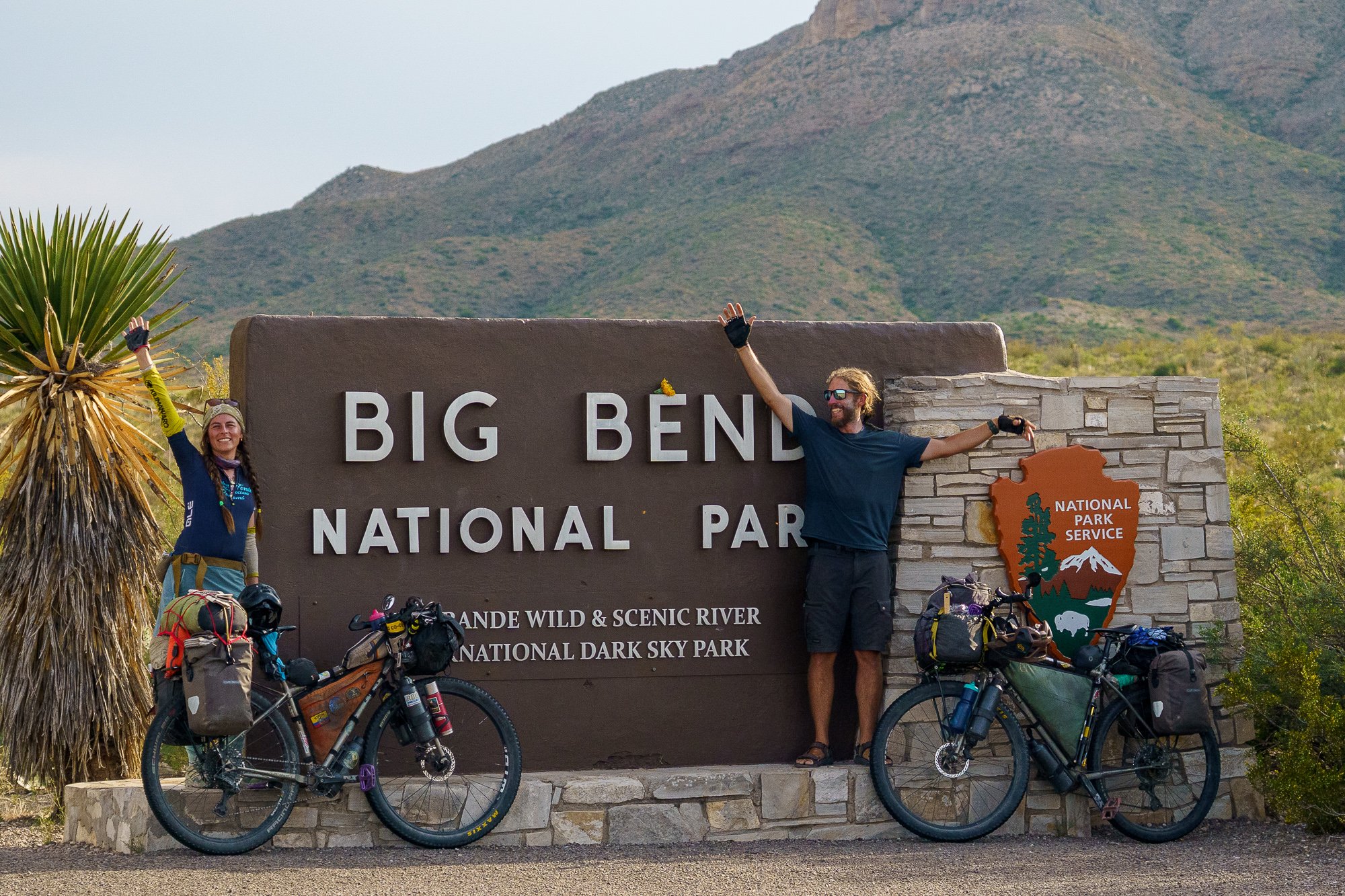
We started our bikepacking journey in Ushuaia and have traveled across South, Central America and Mexico. Now, we are about to cross into the United States and have to make a choice…
Thanks for reading along! You can support our journey by becoming a Patreon member and access live updates, stories and early video-releases — and maybe even a postcard from our next destination. Cheers!
As our time in Mexico slowly wound down…
… Ryan and I faced a new decision: cross the arid Chihuahuan desert towards Ciudad Juarez, or trace the contours of Coahuila into Saltillo and cross the border into Texas. Neither of us had ever set foot in Texas, despite it being the second-largest state in the US. More importantly, we’d always dreamed of exploring Big Bend National Park and the surrounding desert country, West of the Pecos River.
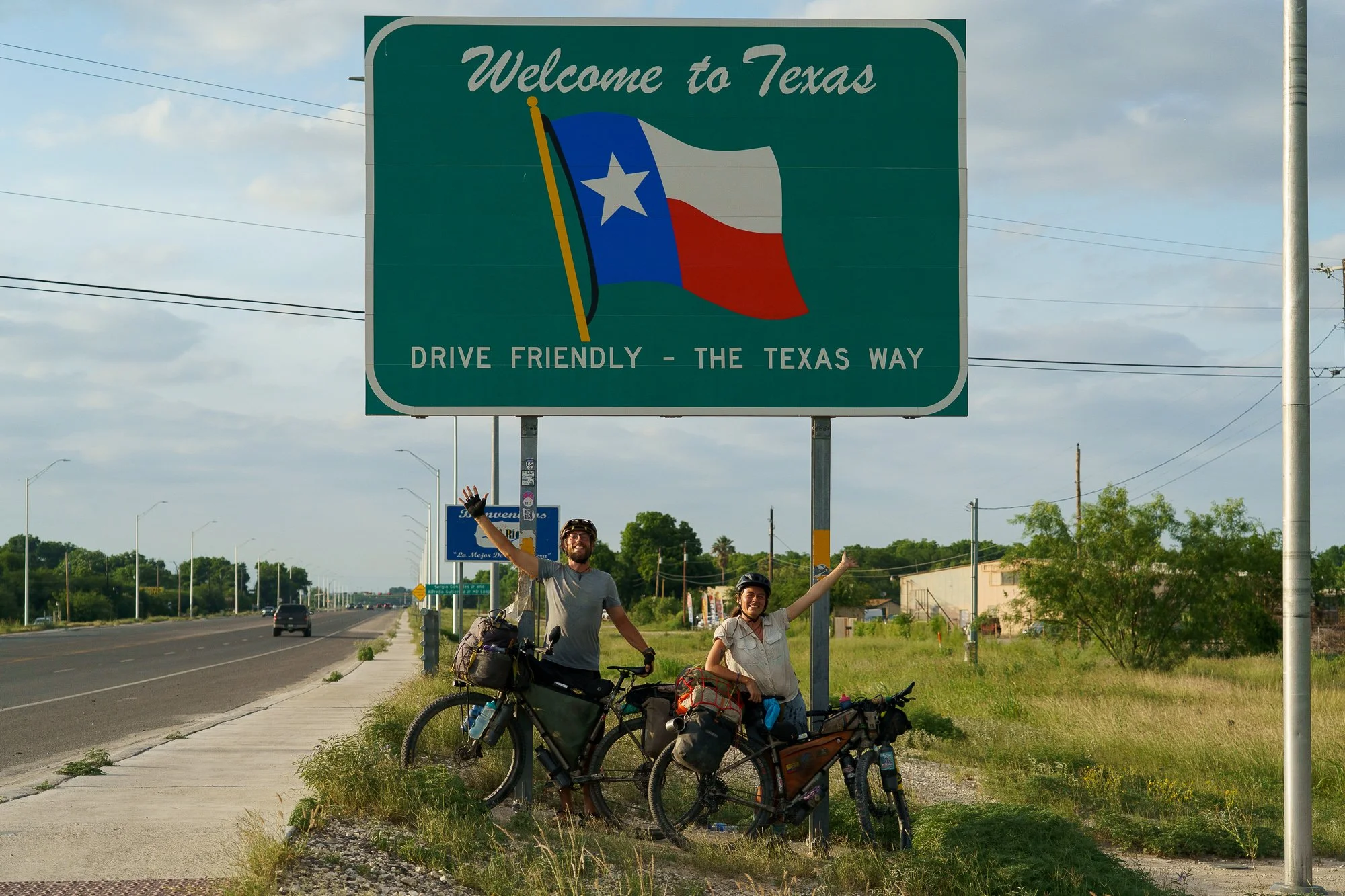
Our minds were made up, and in mid May, we crossed the border from Ciudad Acuña into Del Rio. This truly marked the end of an era, as we said goodbye to Latin America and stepped back into the English-speaking world — the US of A. 🇺🇸
After a fairly easy border crossing and a quick resupply at the local Dollar General — yep, no doubt we’re back in the States — we camped that night by the Amistad Reservoir, offering some relief in an otherwise parched landscape. From there, we cycled west on the shoulder of Highway 90.
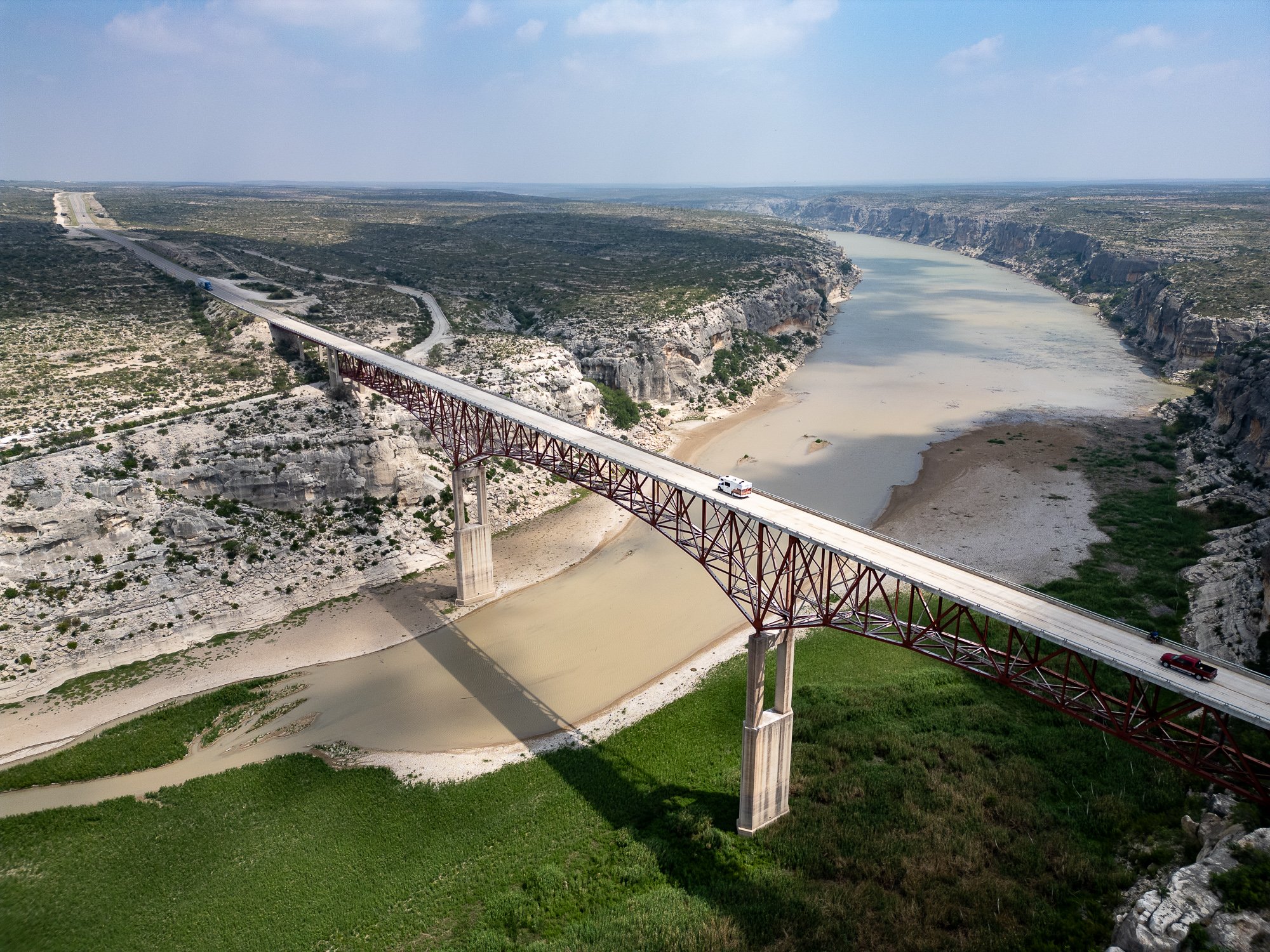
“West of the Pecos there is no law; west of El Paso, there is no God.” - Judge Roy Bean
A closer look on the map revealed just how remote this part of Texas really is. Every few hours, we’d come across remote hunting ranches or abandoned homesteads. The region’s too dry for cattle, it seems, but the herds of goats seemed pretty content here. With 80 to 100-mile stretches between cowboy towns and gas stations, we could only find food and water every day and a half. In between? A whole lot of beautiful nothing.
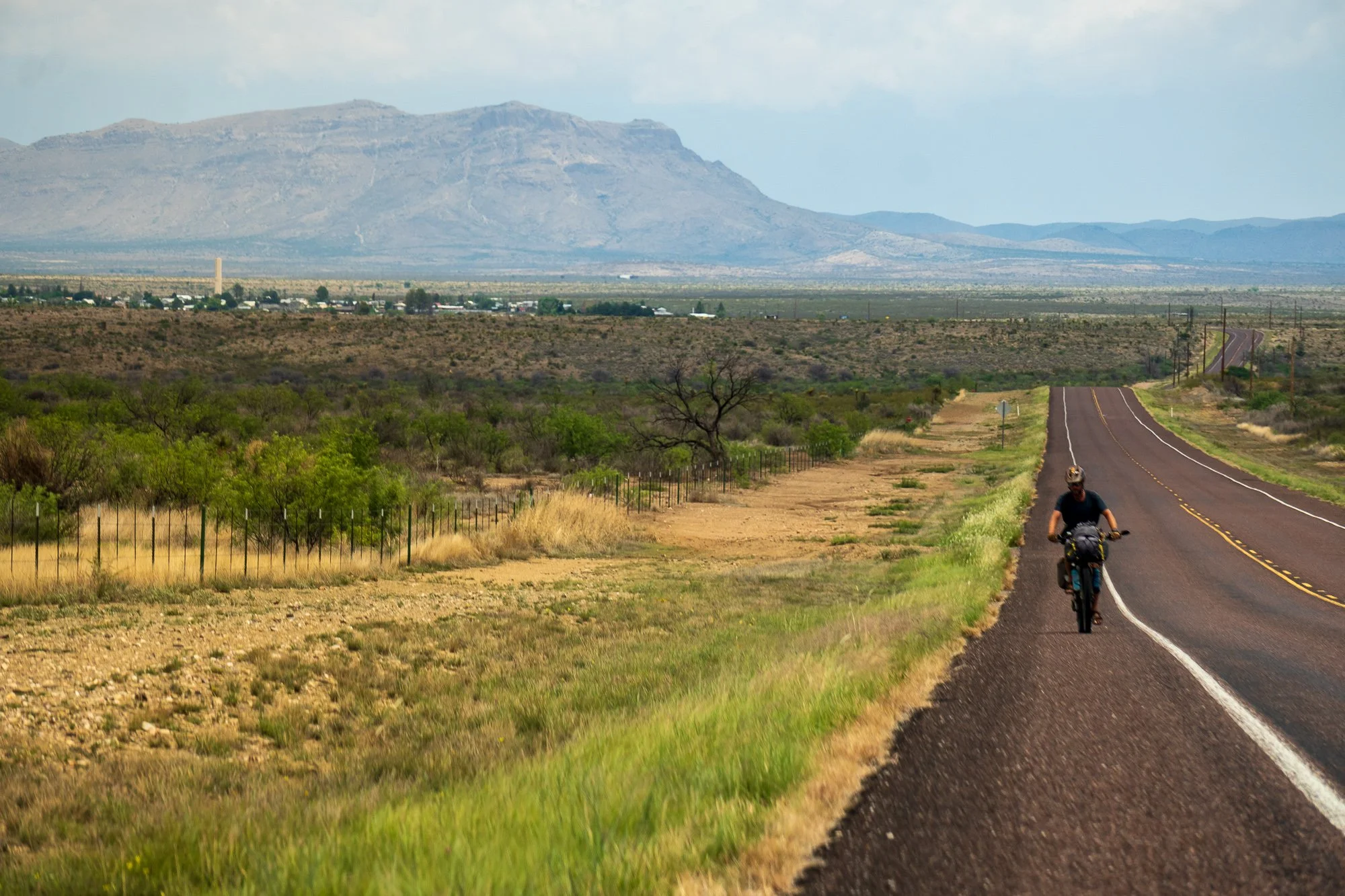
Despite harsh riding conditions and long stretches without water…
… we loved every minute of our time in West Texas. Much of that was thanks to its small towns and people. From day one, we experienced sublime generosity from truckers, tourists and Texans alike. This boundless generosity was beyond anything we’ve experienced. After writing down all those act of kindness in our journals, Ryan and I promised each other we will be paying it forward for the rest of our lives.
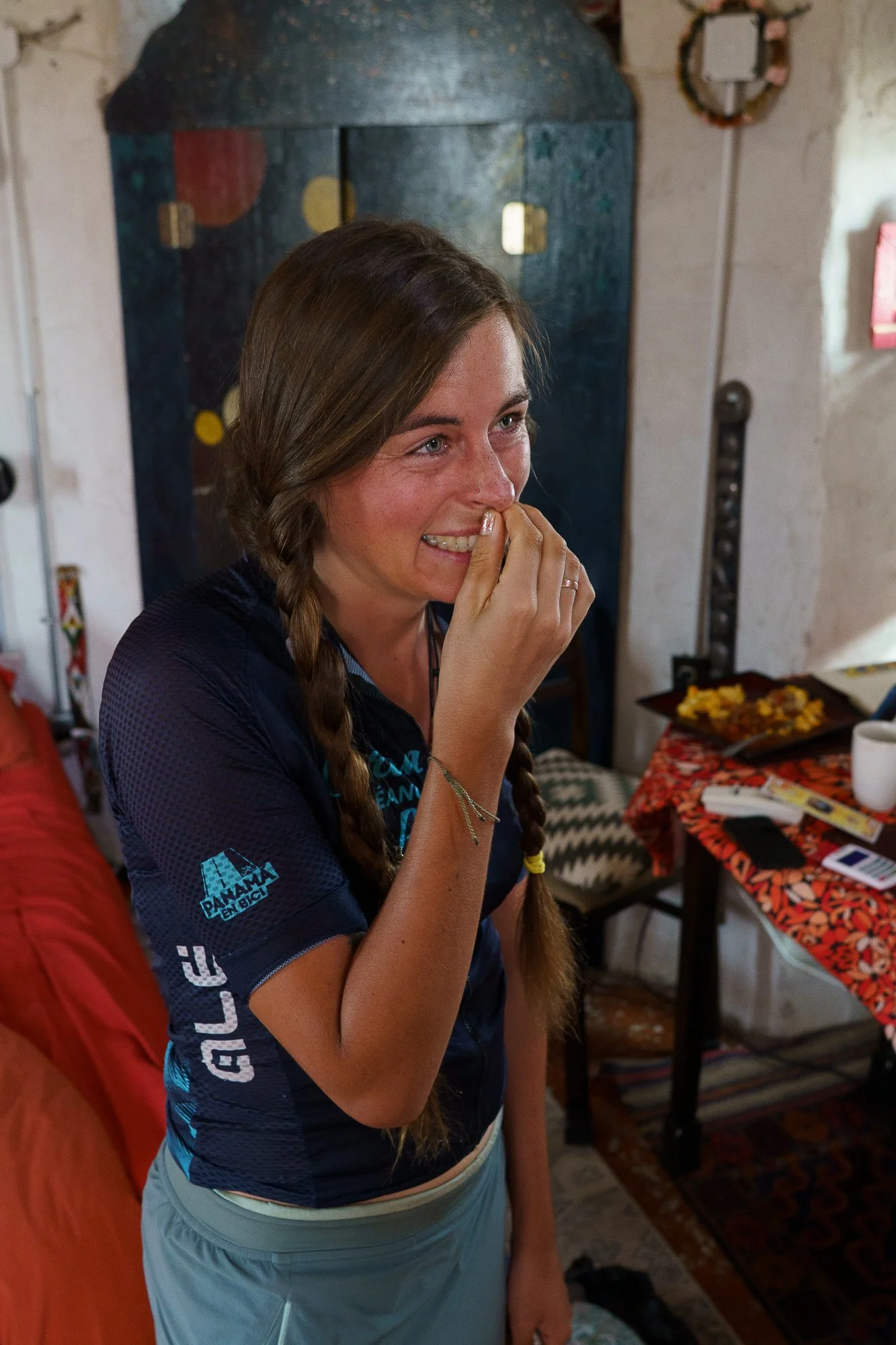
Some examples that come to mind:
On our first night at the Amistad Reservoir, three teenage boys drove by our camp and shared two Cokes with us, politely wishing us luck on our trip. The next day, a retired Floridian couple traveling the West in their RV invited us in for homemade burgers and beer. We sang Johnny Cash and Willie Nelson songs while playing the guitar and swapped stories about family, marriage, and work. Pulled over on the highway to read some tourist information signs, a hippie couple from Oregon offered us drinks, weed and water. During a severe storm, construction workers lend us their RV to sleep in —for free. Austin from Marfa took us in for the night and made us incredible breakfast. Some folks even gave us money for food and lodging. The list goes on and on …
But it was the town of Marathon, and its people, that we fell in love with.
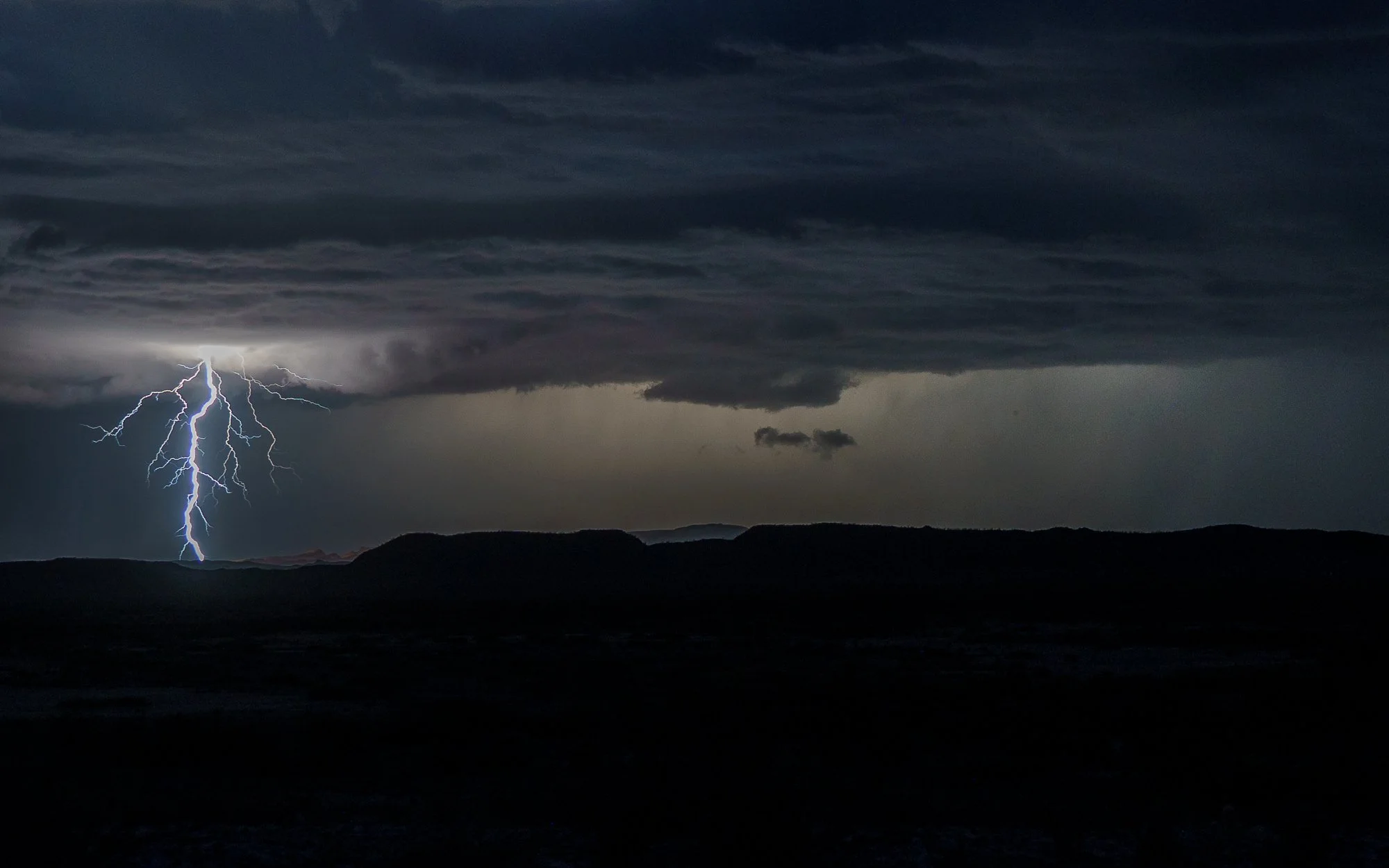
Seeking shelter for a severe lightning storm, which Texas is well-known for, we made it to Marathon just in time. Located about 40 miles north of Big Bend National Park, Marathon is unincorporated and home to less than 500 people.
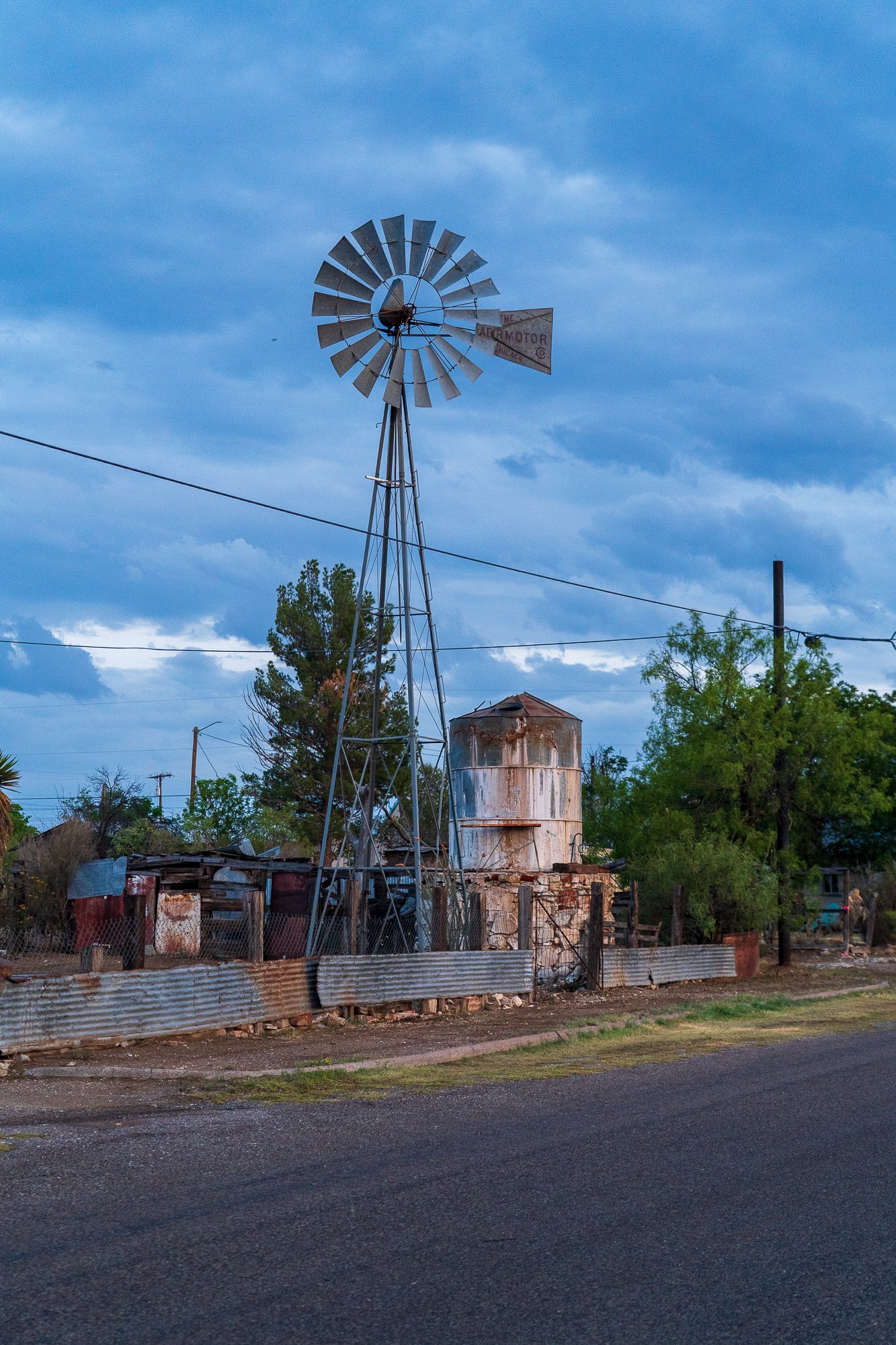
While hiding from the rain in the local liquor store, we met Becky, who’s in charge of the town’s (excellent) drinking water supply, but was helping a friend out by managing the store. We got to talking and sharing stories, and she simply wouldn’t hear of us camping out in the storm. She called the owners of “La Loma del Chivo” and set us up in a room for the night. Before we could protest, her husband Lupe showed up in his truck, put our bikes in the back, and drove us there.
It was just one of the many bouts of Southern hospitality we experienced, but it might have been the one that touched us most, As cyclists, we are quite vulnerable and exposed to the elements. Having strangers look after you in this way, it showed us what community looks like, the power of stepping up for other people. It’s beyond inspiring, and we cannot wait to do the same for other travellers.
La Loma del Chivo was one of the most magical paces we’ve ever stayed in.
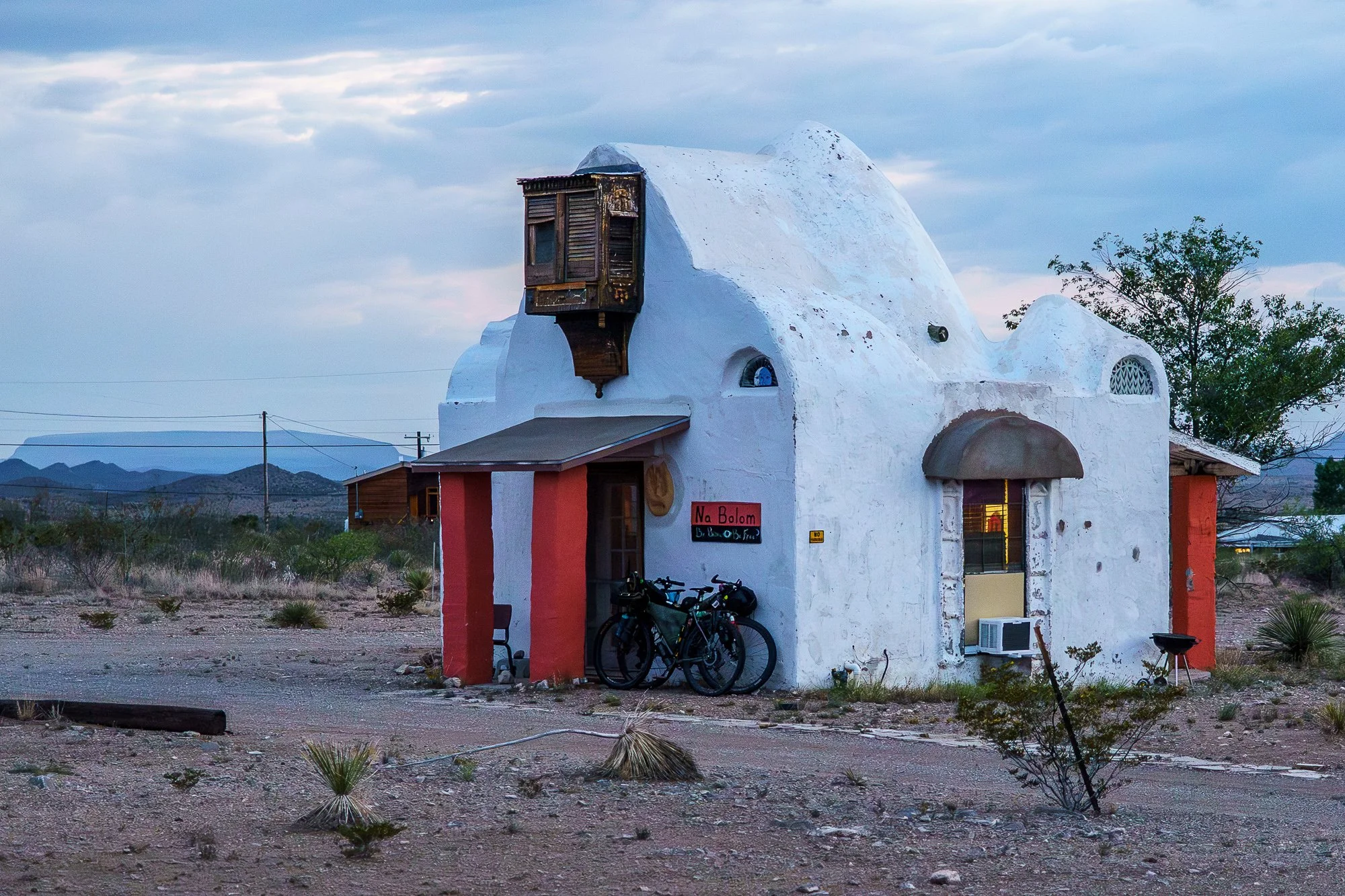
Homes in different shapes and colours, made of recycled materials, adobe, wood and stone. Together with the hands of many WWOOFers and volunteers, Gil and Ingrid have created a safe haven for travellers, artists and visitors.
This well-traveled couple has left their own personal mark on the homes too, with interesting books, fascinating objects, dazzling colours and an incredible eye for detail. Our tired spirits found rest that night, in La Loma del Chivo. And meeting Becky and Lupe, Gil and Ingrid, and the team of construction workers at the local supermarket was a memory we will cherish forever.
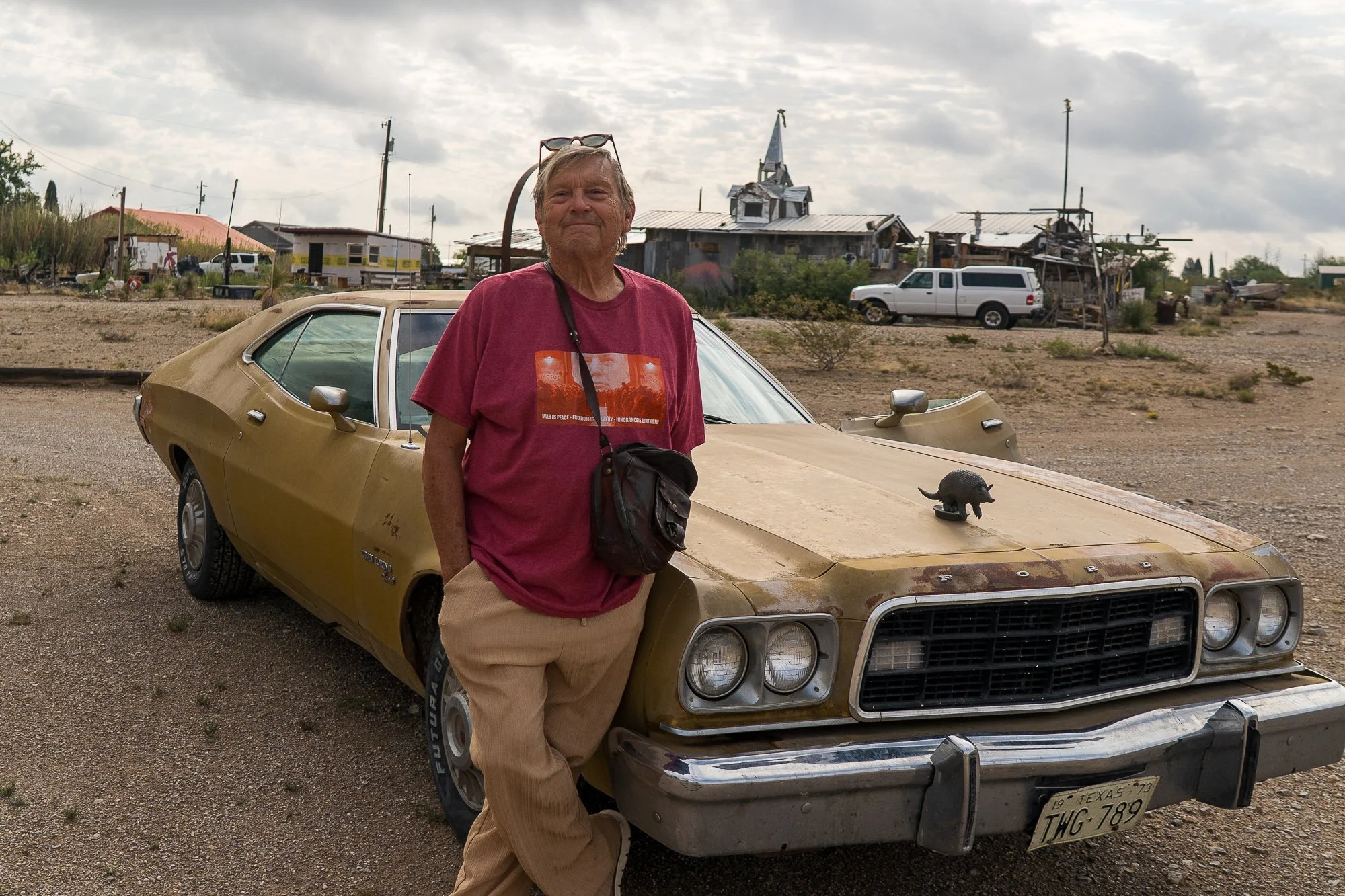
Owner Gil, a true traveler and artist, posing in front of his incredible ride.
And then… there she was: Big Bend.
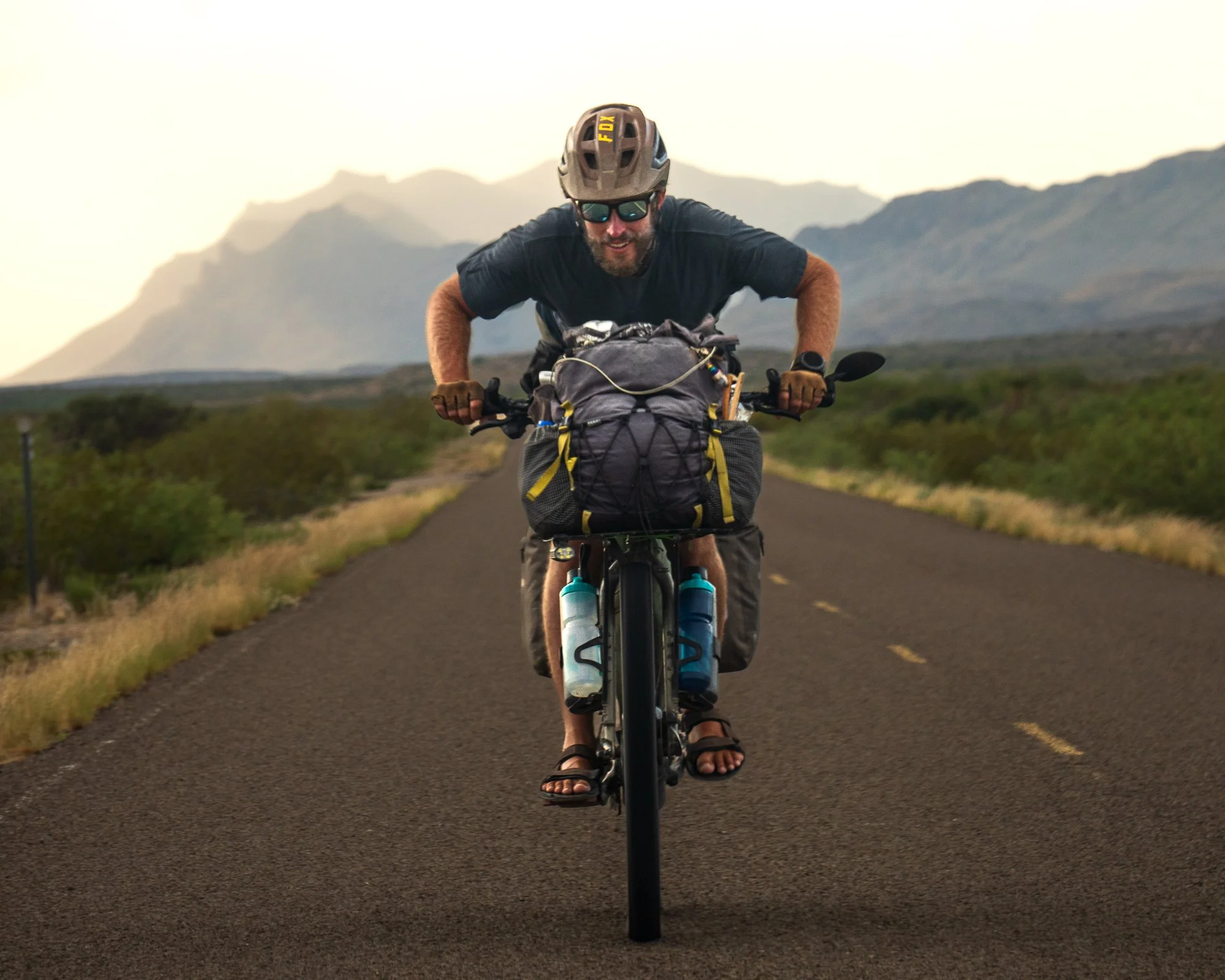
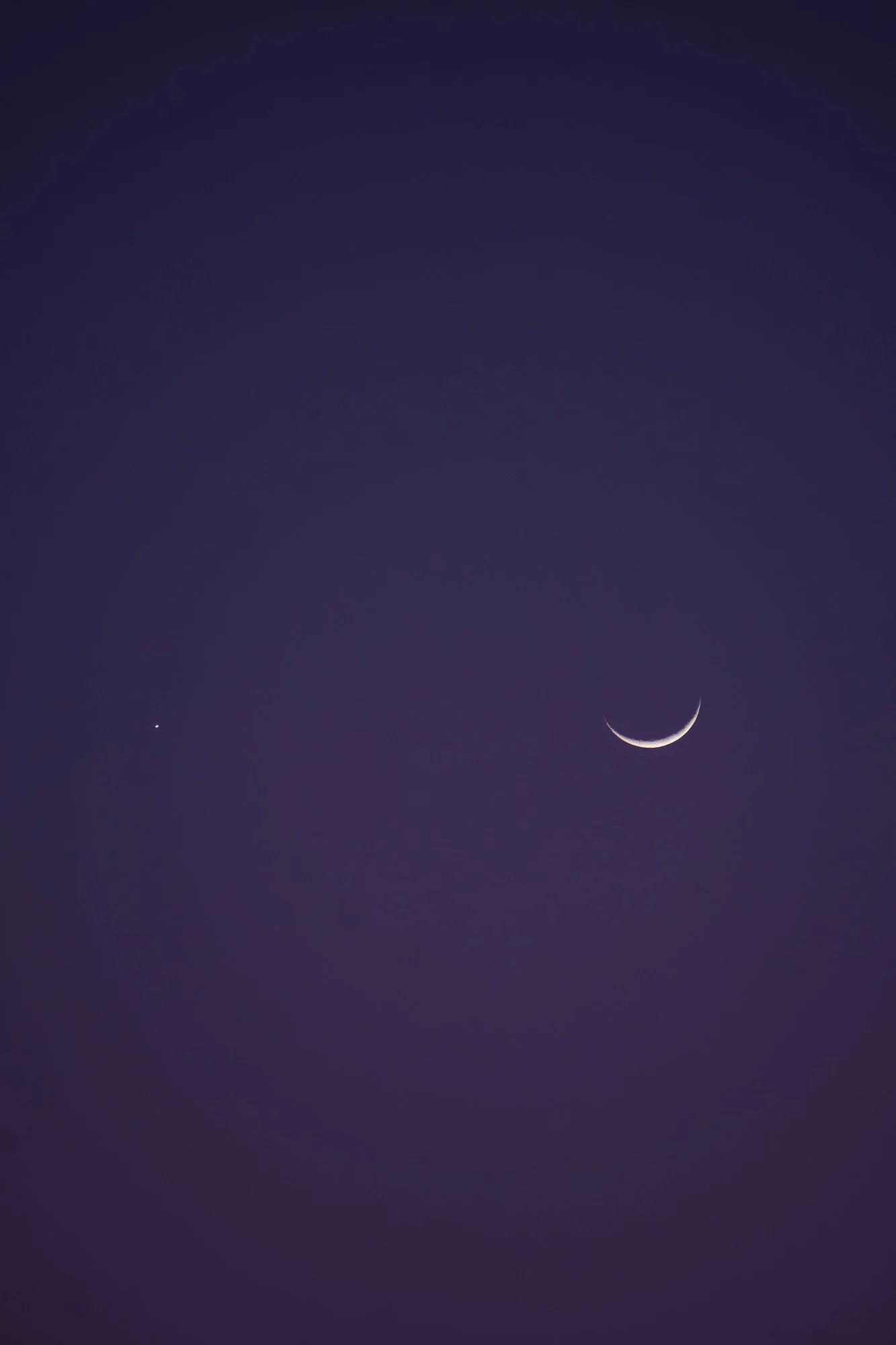
Gloriously green and golden, full of life, bathed in a different light at different times of the day. Baking hot around noon, cool at dawn, and even more marvellous at night. Big Bend is a Dark Sky Reserve, thanks to its remoteness and strict light pollution controls.
Riding across the Chihuahuan desert, we spotted tarantulas rising on their hind legs, lizards, roadrunners and snakes. Springtime brought us blooming Ocotillos, Rainbow Cactus, and Prickly Pears. We went back in time to learn about the history of dinosaurs in the park, admiring ancient fossils and bones.
At the center of Big Bend are the Chisos mountains, proudly towering over the landscape, a true and green paradise in the desert. If you’re lucky, you might even meet black bears on one of the many hiking trails! And of course we can’t forget the Rio Grande, the “vein of Mother Earth” herself, a vital water source for every living creature in the area.
We exited the park boundaries and stumbled straight into Terlingua Ghost Town, where a 60-year old local named “Brows” picked us up on the road — literally — and invited us to stay at his guest cabin. He taught me how to shoot a rifle in his backyard, and the three of us drank tequila shots and swapped legendary stories until the sun went down. The true Texas experience. 🍸
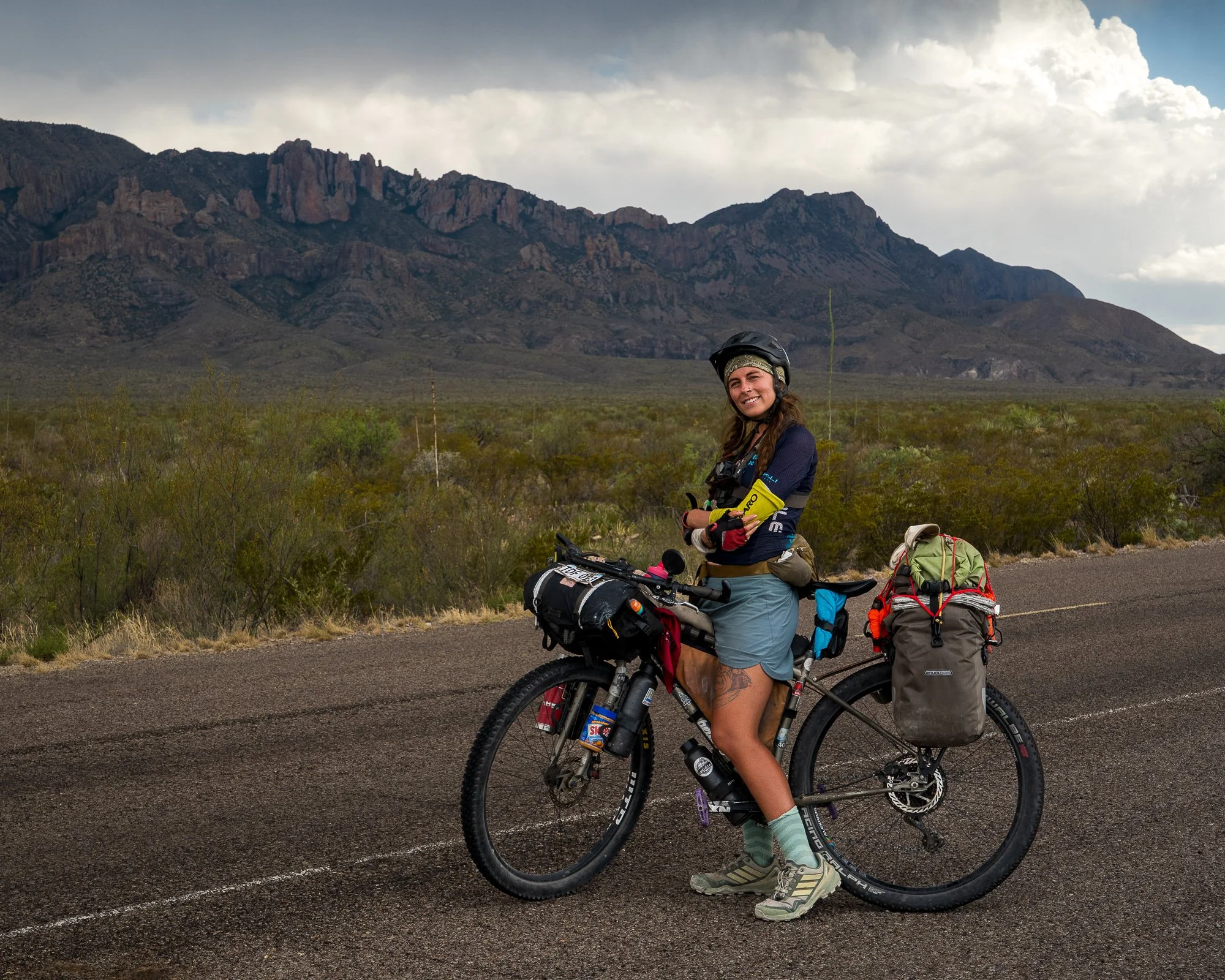
Terlingua is a tight-knit community, consisting of people from all over the States really, but they seem to have one thing in common: They look out for one another. Sure, the town largely lives off tourism, but the eccentricity and originality is real. The liquor store is well-visited, bars are hopping, Spanish and English are harmoniously woven into a single sentence, and there are whispers of million-dollar mines, witness protection programs, and desert mysteries. We’d expected a literal ghost town, but what we found was a whole lotta spirit. Terlingua is a unique place you need to experience for yourself. Say hi to Brows for us if you see him.
In Big Bend Ranch State Park, we trace the contours of the Rio Grande for two full days.
Heat exertion plagued us during the hottest times of day, but we found some shade underneath tree canopy, park campgrounds and tipis alongside the road. The Big Bend area truly is a magical place where the river and the mountains form a natural barrier between Mexico and the United States.
And it’s in critical danger.
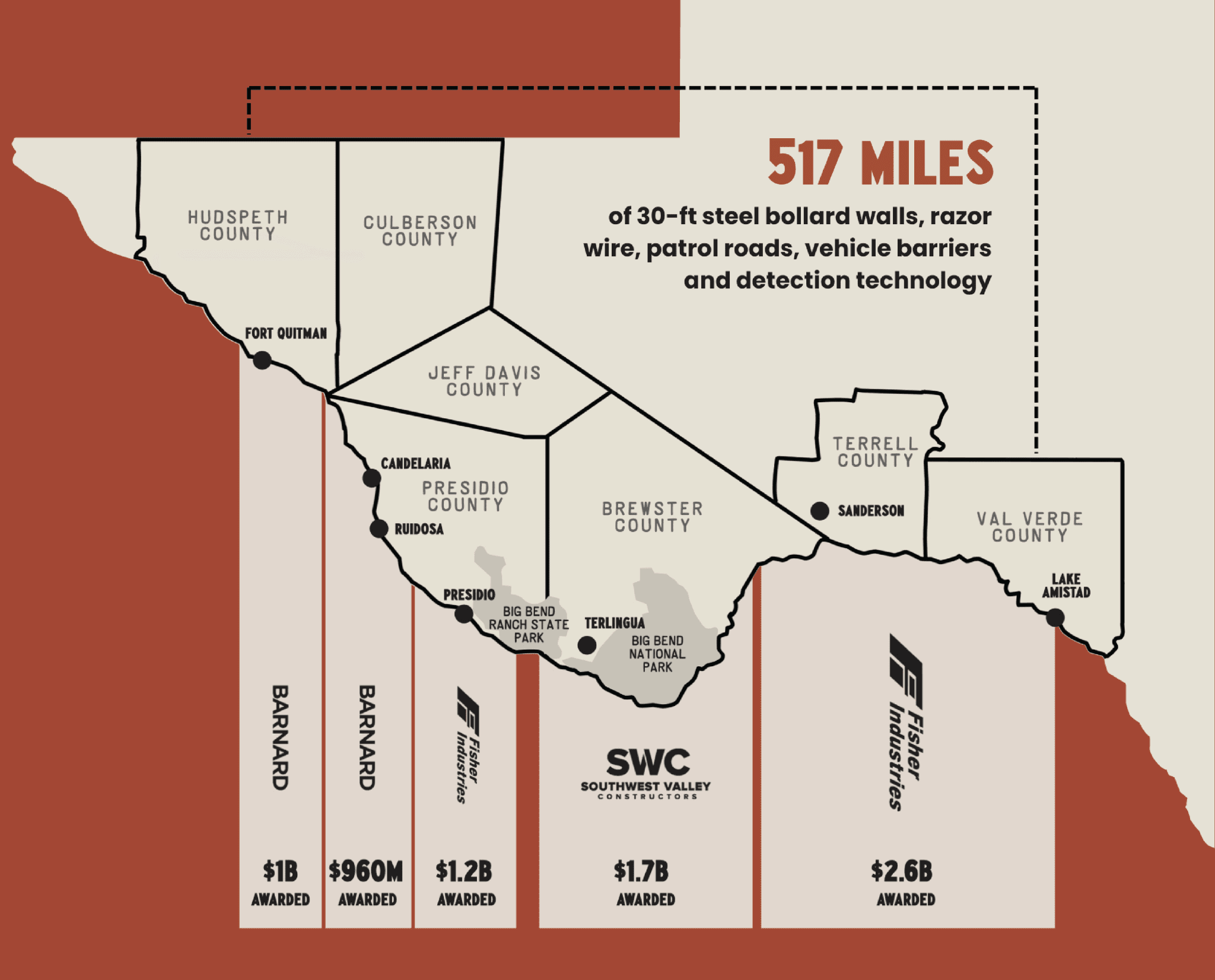
Photo credit: nobigbendwall.org
In this beautiful part of West Texas, right beside the undulating Rio Grande that gives life to the area, a border wall is being built as we speak. Earlier this year, journalists from the Big Bend Sentinelhave discovered plans from CBP to grant the largest border wall contract (+2 billion dollars) in US history. The picture on the left from nobigbendwall.org sums it up pretty adequately.
Everyone we spoke with told us that illegal immigration is far from their primary problem. While they support a fair and safe border security, Big Bend is historically a very low-crossing sector. The Chihuahuan desert’s simply too dangerous for most to attempt, and those who do succeed, get caught by the numerous border patrol units.
Whether it’s stacks of barbed wire, patrolling roads and lights or a physical barrier; the consequences of border wall constructions are severe. A physical border wall between Mexico and the United States IN Big Bend National Park and the Ranch State Park will cut wildlife off from their only water source. It will introduce the construction of new roads being built and light pollution at nighttime, hindering the observation of dark skies. An increased presence of drones and personnel will put pressure on natural and local resources, impact outdoor tourism and likely damage geographical and historical artefacts. Distancing animals, locals, farmers, and tourists from the Rio Grande will massively impact the region, not to mention the 500+ land owners who lose access to the river in their backyard.
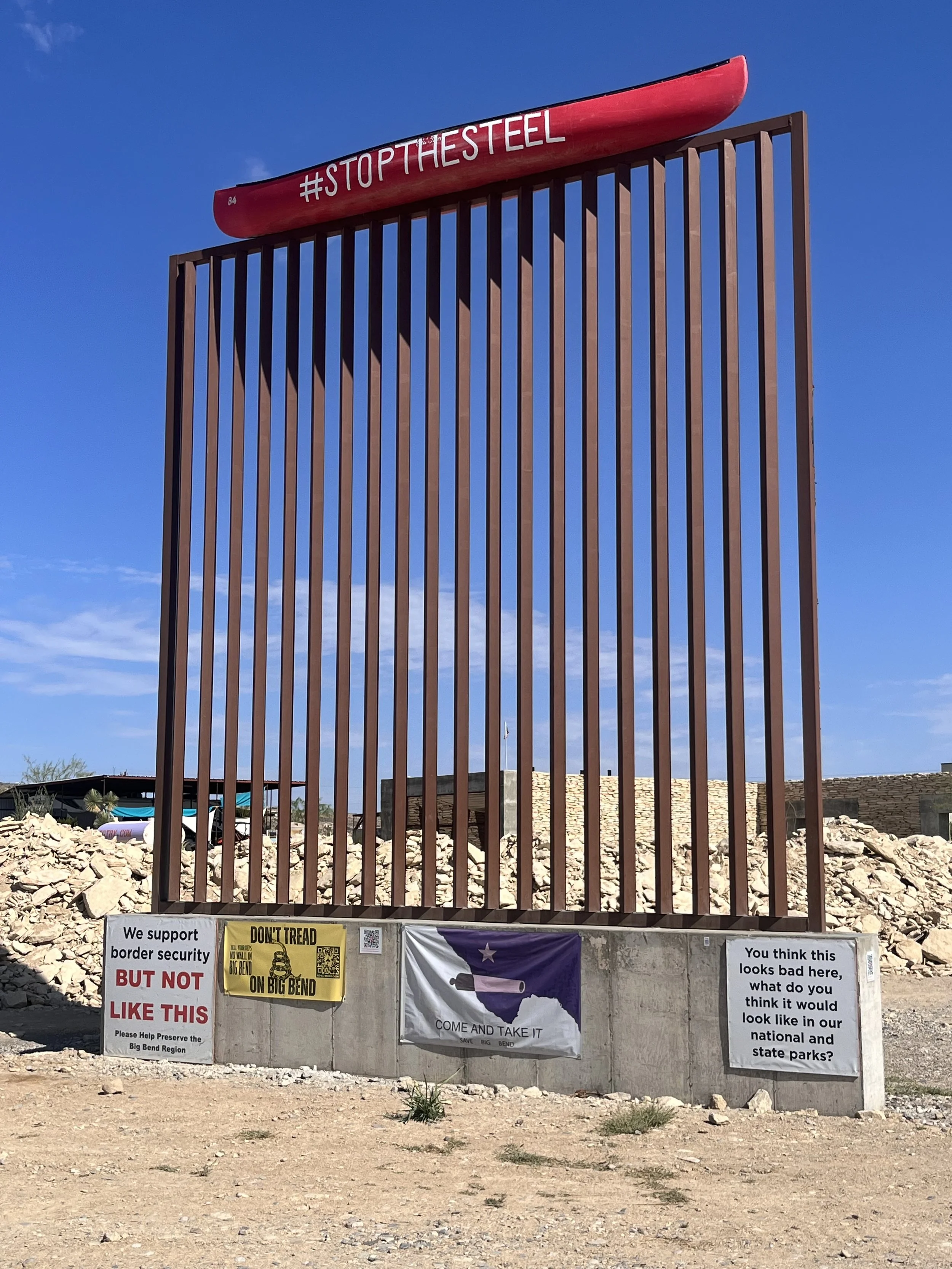
We fully support the fight of the locals.
We saw the signs everywhere, on every door and every property. For the sake of the people, plants and animals of the larger Big Bend area — things have to turn around.
For more information, please visit nobigbendwall.org or listen to the Dirtbag Diaries’ latest episode and research on the topic. Let’s fight the good fight — together. So we can all continue to enjoy the wilderness of the Big Bend area and preserve it for future generations.